
ソフトチュアブル・パウダー・ドロップの比較:最適な剤形の選び方
クイックアンサー
ソフトチュアブルは嗜好性と一般層への訴求力に優れ、パウダーは高配合とふりかけ提案を低コストで実現し、リキッドドロップはプレミアム感と正確な用量管理に適しています。多くのブランド様はソフトチュアブルから始め、2 つ目の剤形を加えてラインを広げています。
執筆 Beno · 監修 Prof. Wang Kai, Technical Advisor
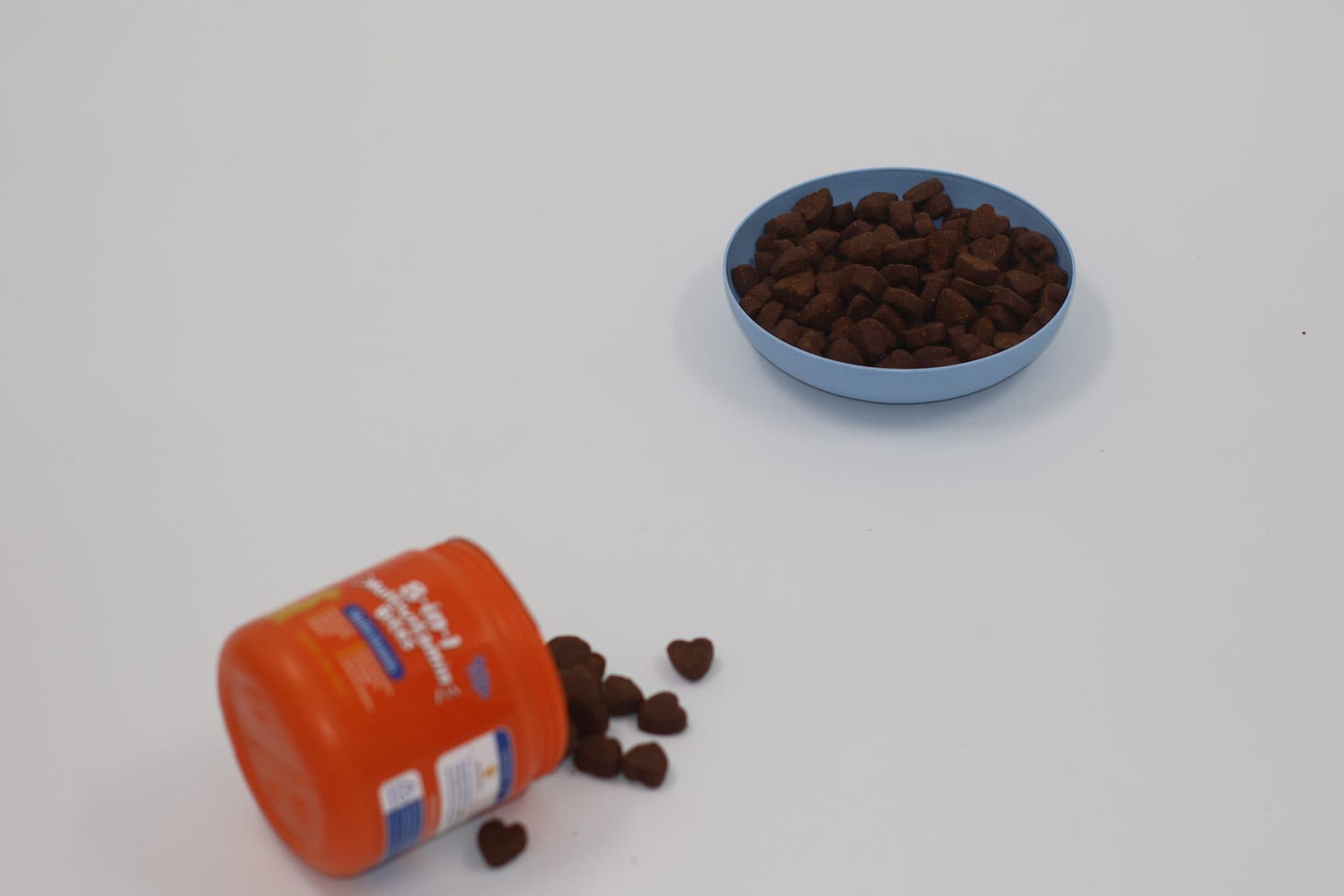
Format is the decision most brands make last and regret first. Palatability, dose, stability, listing photo, landed cost and which machine you actually need all sit on that choice. Change it after artwork and you are not tweaking. You are starting a second SKU.
Almost every article ranking for "chews vs powder vs drops" is written for a pet owner choosing a product off Amazon. This page is for a brand owner choosing a first manufacturing format. The science overlaps. The commercial question does not.
We manufacture six dosage forms in Shenzhen: soft chews, powders, tablets, pastes, oils and drops. Soft chews take most of the volume. That is a demand fact, not a slogan.
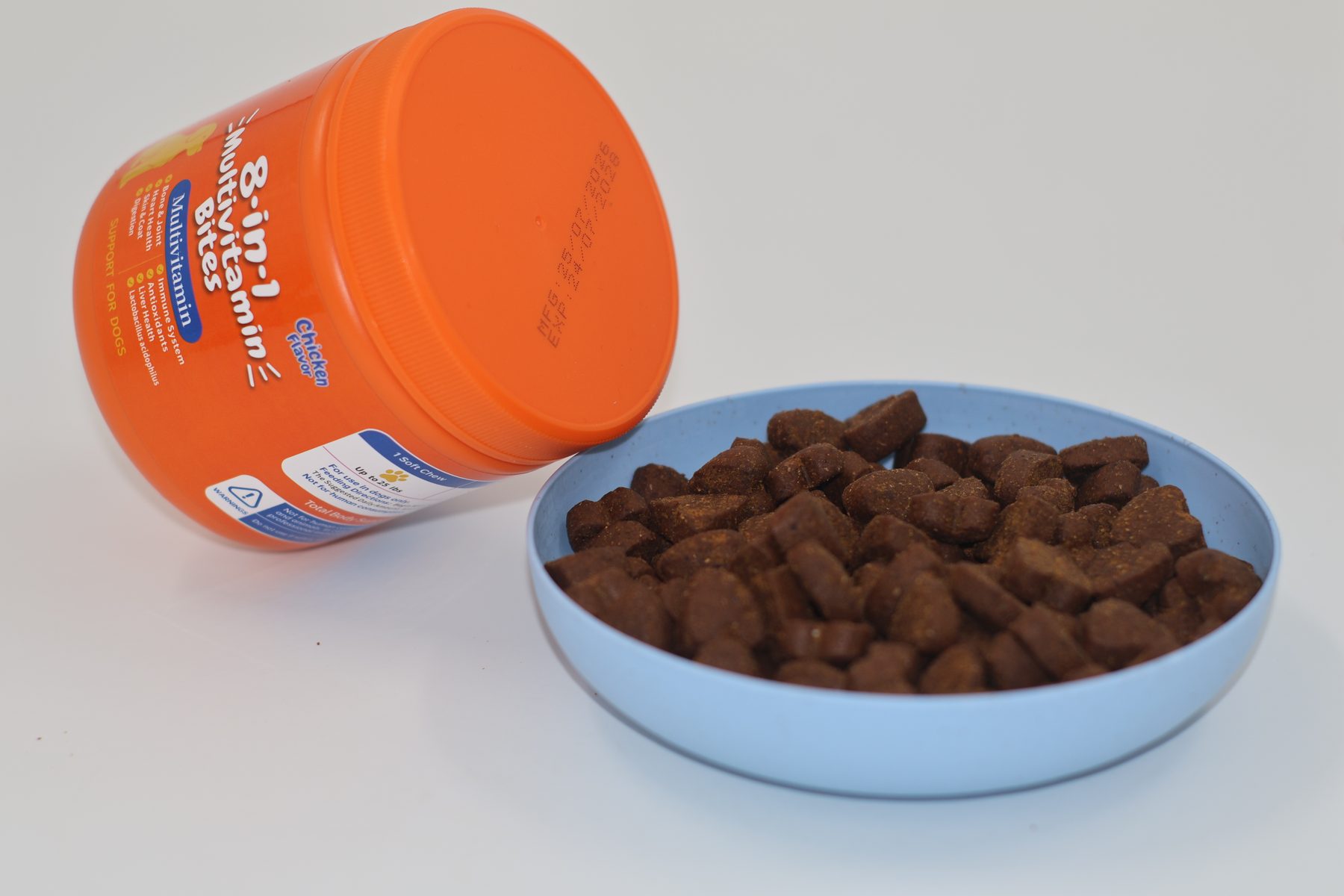
A buyer table, not a pet-owner table
| Soft chews | Powder | Drops / oils | Tablets | |
|---|---|---|---|---|
| Owner compliance | High if it eats like a treat | Depends on the meal | High if mixed or dropped on food | Low unless hidden in food |
| Actives load | Constrained by piece size and palatability | High | Medium; viscosity and fill matter | Precise milligrams |
| Heat / process risk | Extrusion and moisture | Clumping, humidity | Oxidation, leaks | Press and optional coating |
| Amazon / retail photo | Strong | Weak unless lifestyle shot | Strong bottle | Weak |
| Clinic / precise dose | Moderate | Scoop is approximate | ml-level | Best |
| First-SKU default | Yes for marketplace | Yes for mix-in / high dose | Second SKU / premium topper | Vet or precise-dose story |
No format is "more effective" in the abstract. A chew the dog eats every day beats a theoretically cleaner powder the owner stops using in week three. That is the consumer literature. For a brand, add: can the line run it, can you photograph it, and can you defend the claim on the pack.
Soft chews
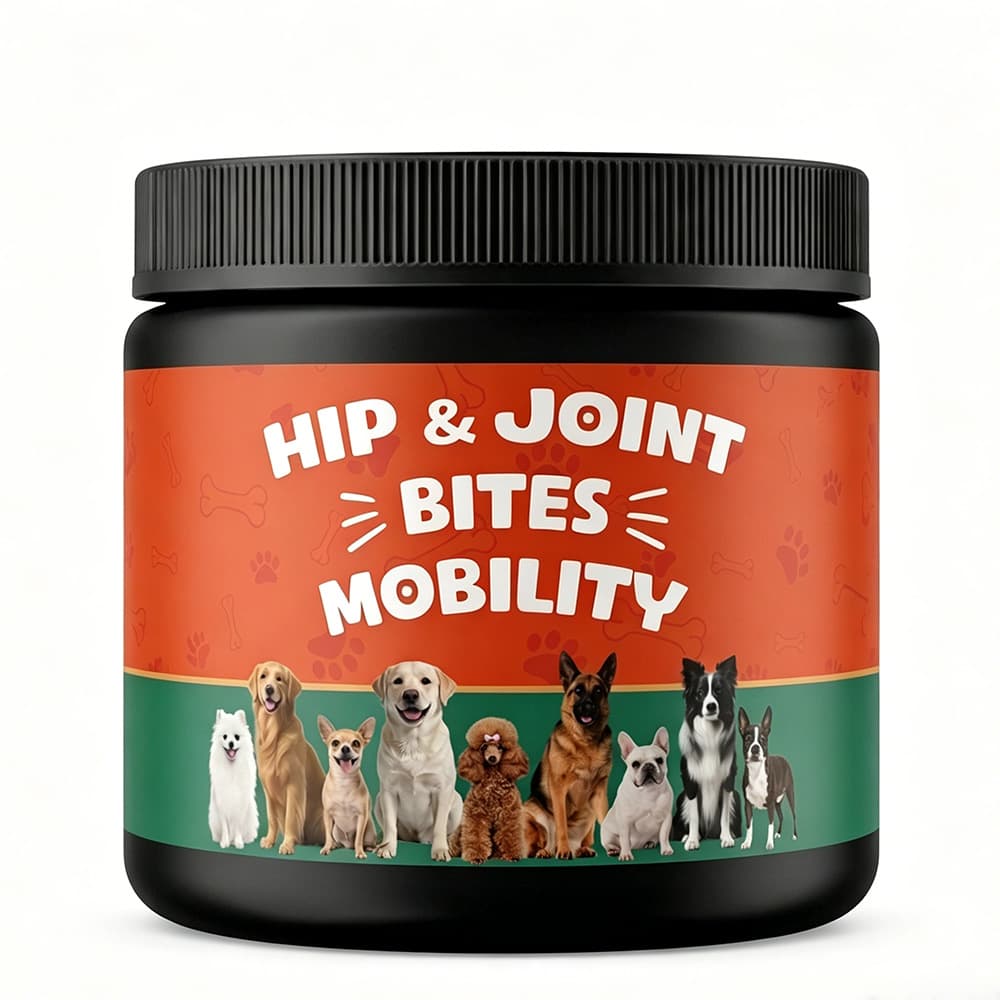
Pets treat them as food. Owners do not fight a capsule. Joint, calming, skin-and-coat and multivitamin lines live here because the use case is daily and visible.
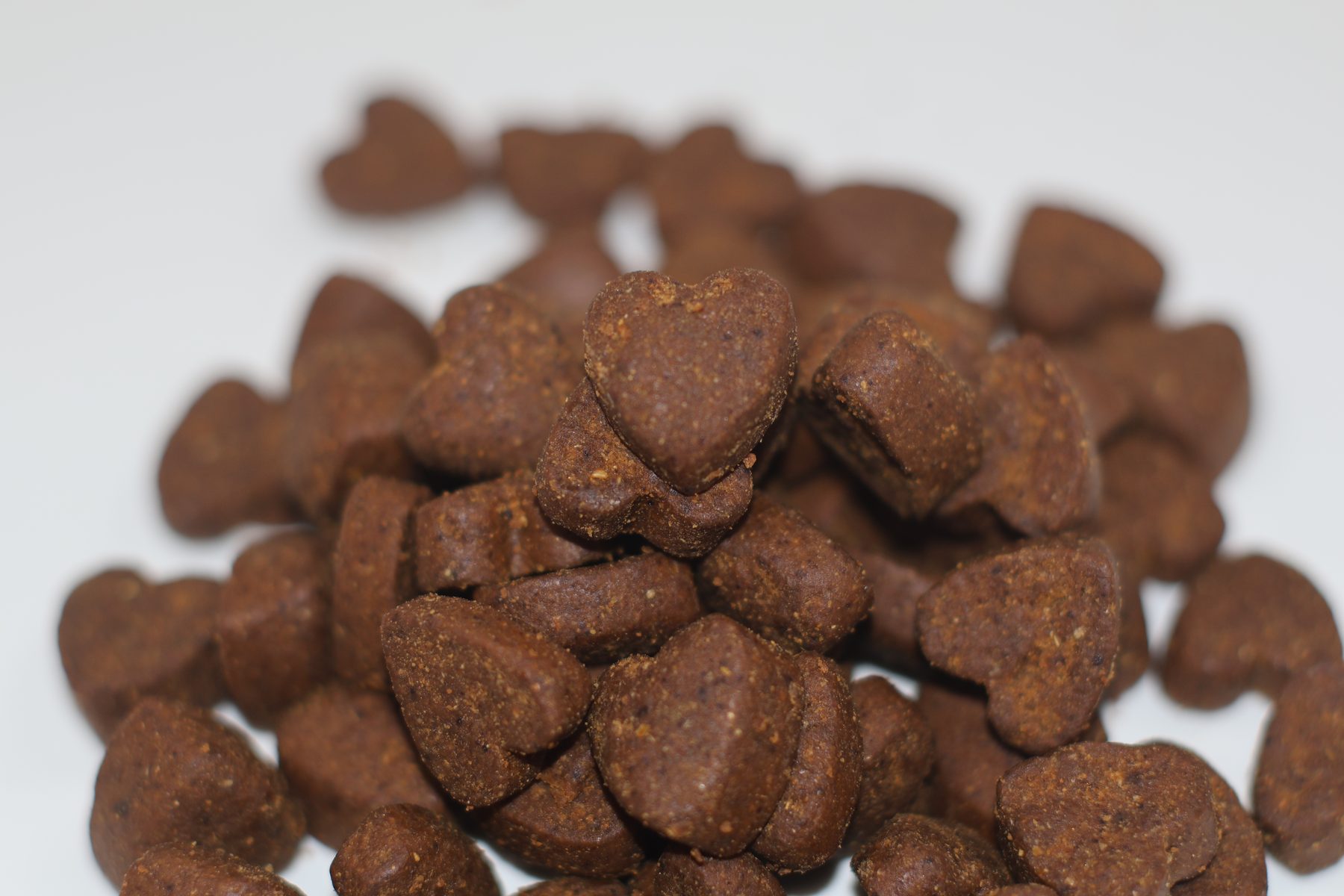
On our side the constraint is the extrusion line: about five tonnes per hour, which is also why a 500-unit stock chew MOQ is viable. Custom shapes (heart, bone, paw) are possible; they are a tooling and changeover conversation, not a free extra on a first 500.
Stability and moisture are the manufacturing risks. Published chew matrices often sit around 15–25% moisture. A piece that looks premium on day one and weeps in week six is a recall conversation. Ask for a sample you can leave on a shelf, not only a photo.
Heat-sensitive actives (some probiotics, some oils) do not automatically belong in a chew. That is a feasibility question in week one of the OEM process, not a surprise at QC.
Retail and Amazon listings prefer chews because they photograph. If your channel is marketplace, starting with powder because it is "cheaper to make" often loses on conversion even if the unit cost is lower.
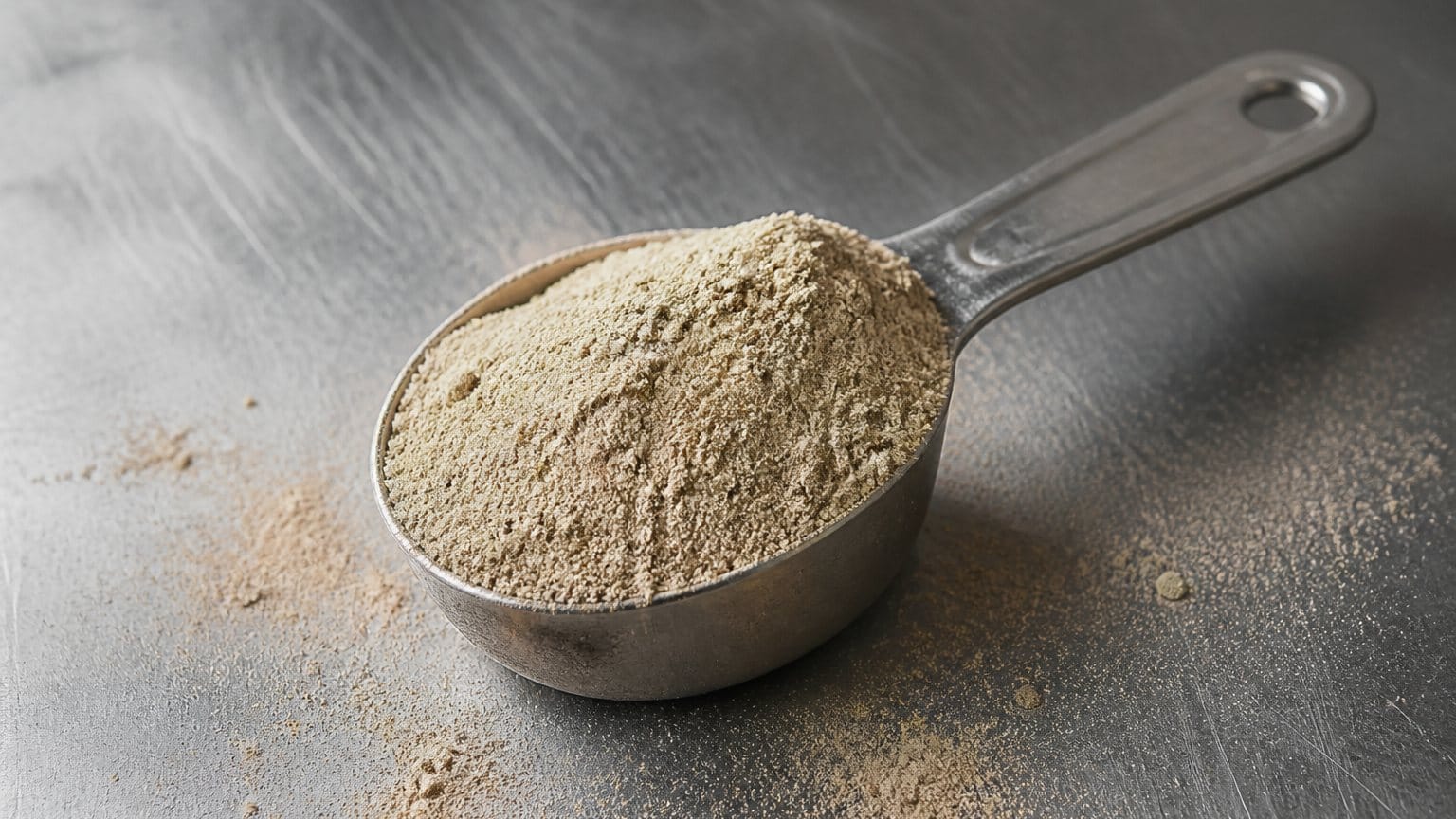
Powders
Powders carry a high actives load without forcing a large chew. Probiotics, goat milk, mushroom blends and some dental concepts belong here. Mix-into-food positioning is honest: the pet does not have to accept a treat texture.
Per-unit cost is usually lower. There is no chew matrix, no flavour system at the same intensity, and no extrusion slot. Dosing is less precise unless you sachet. Sachets add pack cost and MOQ complexity. A tub with a scoop is cheap and messy. Say which one you are selling before you ask for a price.
Humidity and clumping are the factory problems. If your market is tropical, say so in the brief. We will not discover it at the port.
Consumer articles argue powder "wins" on bioavailability because it skips binders. That can be true for a single-ingredient scoop. It is not a reason to launch powder as your only SKU if your buyer is scrolling treat-like chews.
Tablets
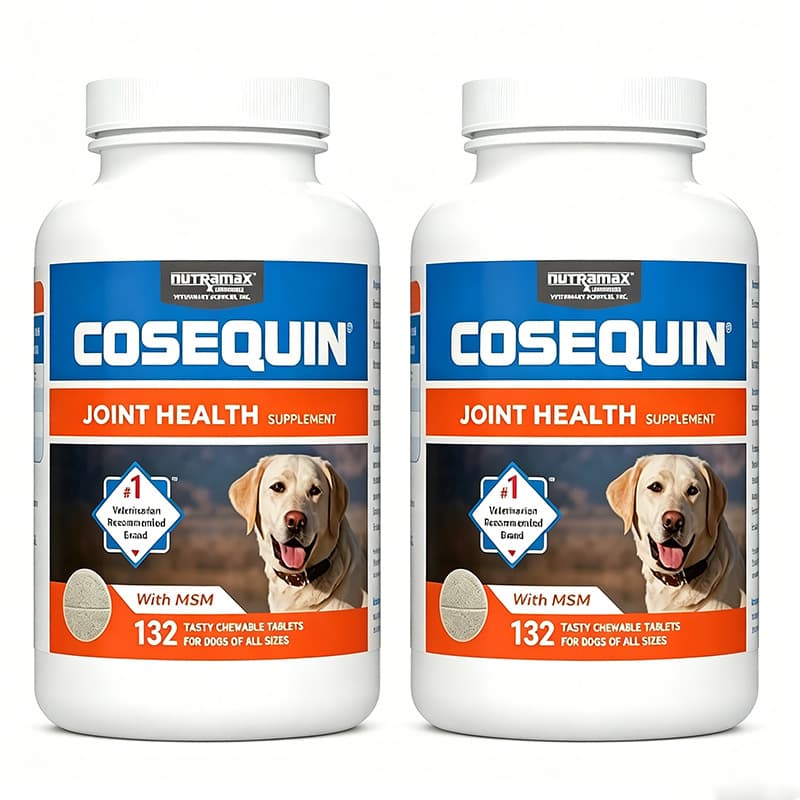
Tablets dose cleanly and ship densely. Palatability is the tax. Many brands hide a tablet in food; that is a use-instruction problem, not a factory problem.
Press capacity and coating (if any) change lead time. Tablets are a poor first SKU if your buyer is an Amazon "treat-like supplement" shopper. They are a good second SKU for a veterinary or precise-dose story.
Drops, oils, pastes
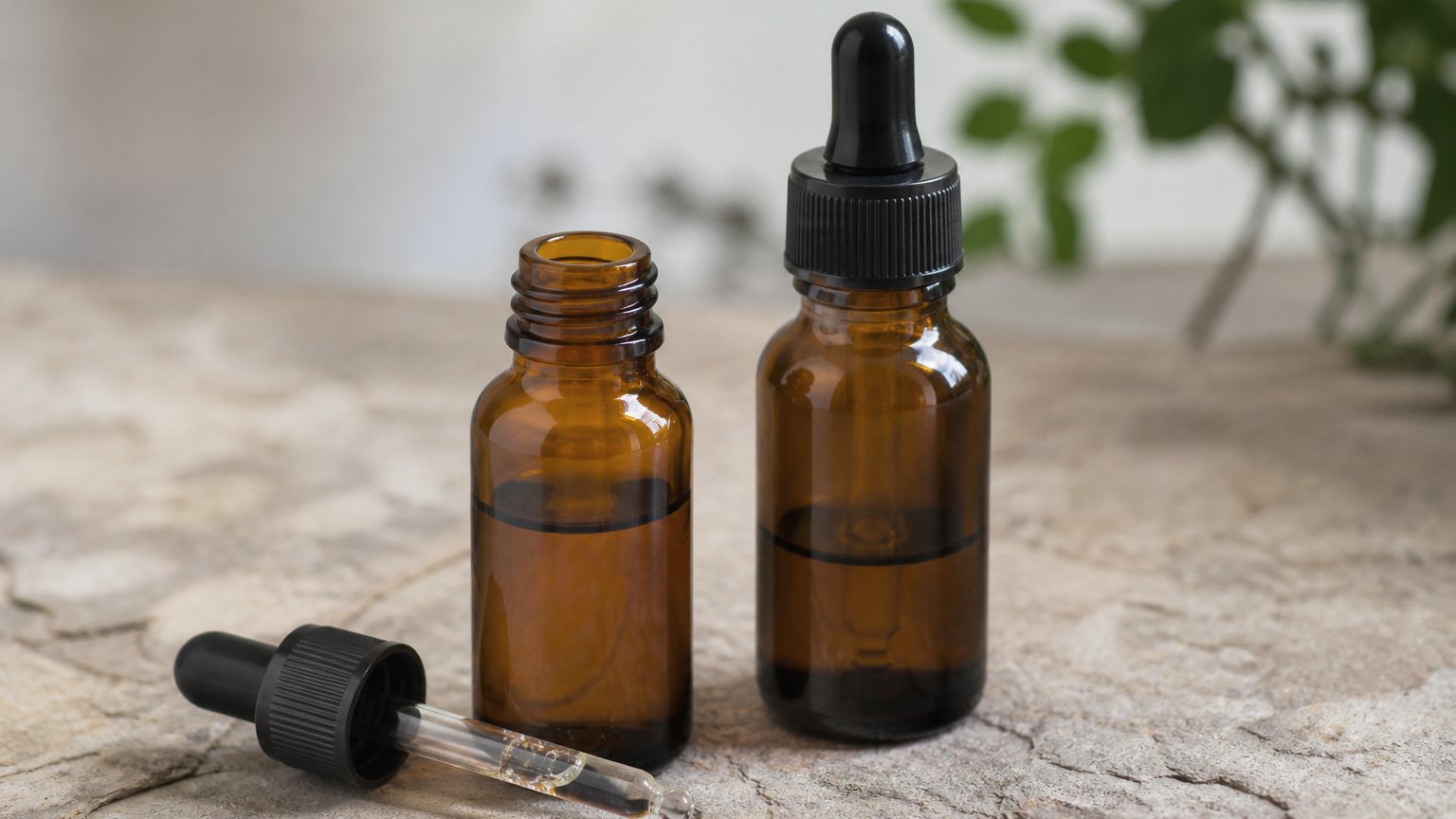
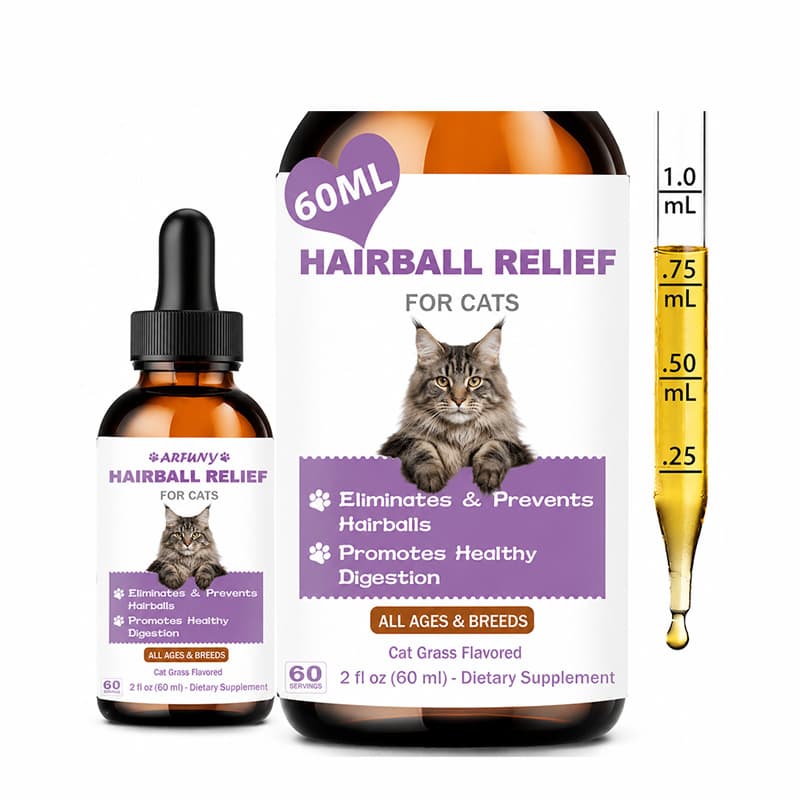
Droppers and pumps look premium and dose by the millilitre. Urinary, tear-stain, omega and some calming concepts sit here. A topper next to a chew line lifts average order value if you already have traffic.
Fill lines, bottle components and leak tests are why "just do an oil version of the chew" is not a week of work. Paste and gel have their own viscosity and filling issues. If you need this format, name the bottle, not only the benefit. The longer liquid brief is liquid pet supplement OEM.
Oils oxidise. Nitrogen flush, amber glass vs HDPE, and storage claims belong in the brief if omega is the hero.
Pastes, gels and the sixth format
Hairball paste and similar gels are a cat-channel format. Filling is a different machine problem than a chew or a powder. If the catalogue already runs the paste, private label is available. If you want a new viscosity or a new nozzle, that is ODM plus components.
We also show freeze-dried concepts in the dosage-form gallery on the site. Treat that as a capability conversation, not a default first SKU. First launches that try to be every format at once are how 500-unit budgets disappear into tooling.
Cost, Amazon and the probiotic exception
Consumer blogs argue powder is cheaper per dose of active, and chews are a convenience tax. On a factory invoice that is often true: you are paying for the matrix, the flavour system and the extrusion slot. On an Amazon listing the chew often converts harder, so the "expensive" format can be the cheaper customer-acquisition format. Run the maths on your channel, not on a blog table.
Probiotics are the exception everyone learns late. Live cultures do not love every thermal step. If the hero is CFU count, say so in the brief and expect powder or a protected process, not a generic meat chew "with probiotics" copied from a competitor listing.
Second SKU, not six SKUs
A second format should earn its slot: powder for high dose, oil as a topper, tablet for clinic. It should not be a matching set for the brand book. Catalogue photos of six formats are a factory capability. They are not a launch plan.
How to choose without a 40-page deck
If the owner will give it like a treat, start with a chew. If the dose is high or the pet is picky about treats, look at powder. If you need a premium accessory SKU, look at oil. If you need milligram-level dose for a clinic channel, look at tablet.
Match the active to the form. Some oils do not belong in a chew. Some probiotics do not belong in a process that hits the wrong temperature. Say the channel in the brief: marketplace treat-like, mix-in, clinic, or distributor.
Most brands that survive year one launch one chew, prove the channel, then add a powder or an oil. Launching six formats on a 500-unit budget is how you fund a warehouse, not a brand.
Palatability is not a meeting-room treat
Doowoo's process pages talk multi-round taste trials. We are simpler, and we mean it: send the sample home for two days. One enthusiastic dog in a sales meeting is not a test.
Check the second-day take. Check the pouch after a week on a shelf. Check whether the colour matches the photo you will shoot. A piece that weeps is a process problem, not a "premium gloss."
If the hero is a live culture, palatability cannot rescue a CFU that dies in the matrix. That is the probiotic exception above, and the longer version is pet probiotic OEM. If the hero is oil, the chew will not match a pump bottle. See skin and coat OEM.
Put the format in the first email even if you are 70% sure. A quote written against "chew or powder, you decide" is two quotes. Production will pick one and you will argue about the other.
When the format is decided, send it with market and volume on the inquiry form. We will tell you if it is a catalogue SKU or ODM. The first OEM email is the short list of fields.
参考資料
よくあるご質問
- Which pet supplement format is most popular?
- Soft chews are the most popular because pets accept them like treats and owners find them easy to dose. They dominate joint, calming, skin-and-coat and multivitamin ranges.
- Are powders cheaper than soft chews?
- Powders often have a lower per-unit cost and carry high actives loads efficiently, which suits probiotics, goat milk and mushroom blends. The trade-off is less precise dosing than a pre-portioned chew.
- Should a new brand launch more than one format?
- Most brands lead with soft chews and add a second format — often a powder or an oil topper — to broaden the range and lift average order value once the first SKU is established.
- Can probiotics go into a soft chew?
- Live cultures do not love every thermal step. If the hero is CFU count, say so in the brief and expect powder or a protected process rather than a generic meat chew with probiotics copied from a competitor listing. Heat-sensitive actives are a feasibility question in week one of the OEM process, not a surprise at QC.
- How should a brand test palatability on a supplement sample?
- Send the sample home for two days. One enthusiastic dog in a sales meeting is not a test. Check the second-day take, check the pouch after a week on a shelf, and check whether the colour matches the photo you will shoot. A piece that weeps is a process problem, not a premium gloss.
Stock formulas this guide maps to
These SKUs are already in production. Open a spec page or send the names in your inquiry.
 ソフトチュアブル在庫あり
 錠剤
錠剤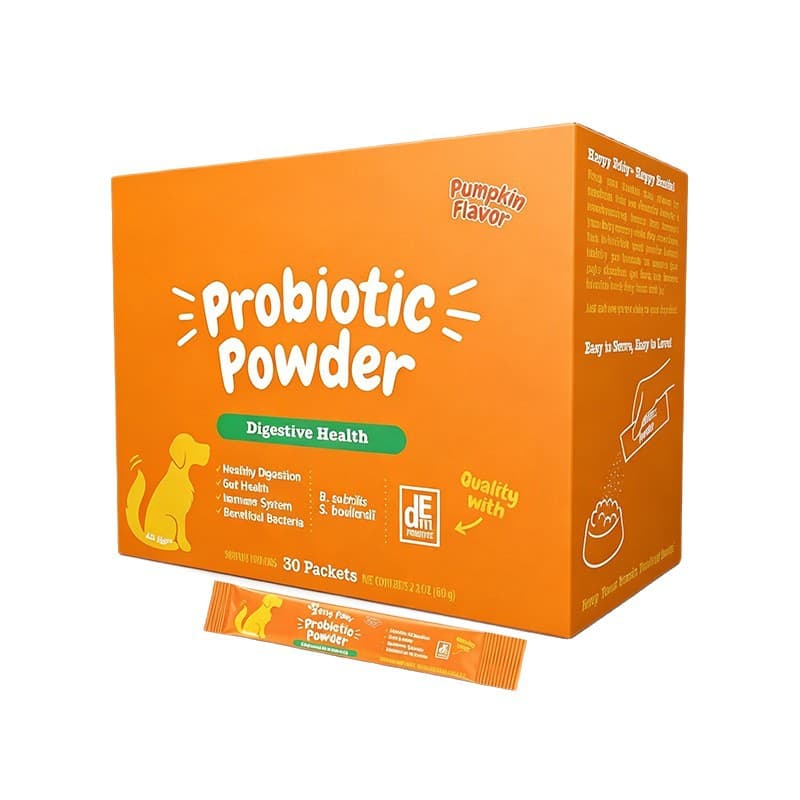 粉末
粉末犬猫兼用 · 腸内ケア
ペット用 プロバイオティクスパウダー
そのまま棚に並べられる犬猫兼用の消化ケアパウダーです。
- 参考価格
- US$7.16 1 個あたり、パッケージ別
- 最低ロット
- 3,000 個
 液体ドロップ
製品化を検討しませんか
ブリーフをお送りください。OEM/ODM チームが進め方、MOQ、サンプル手順をご案内します。