
Pet probiotic OEM: CFU, strain, and why the chew is not always honest
Quick answer
Print CFU at end of shelf life, not at blending. Name the strain, not only the genus. Spore-forming Bacillus survives chew processing better than many Lactobacillus cultures. Powder is usually the honest high-CFU SKU; the chew is the daily-use SKU. Disease claims stay off the pack.
By Beno · Reviewed by Prof. Wang Kai, Technical Advisor
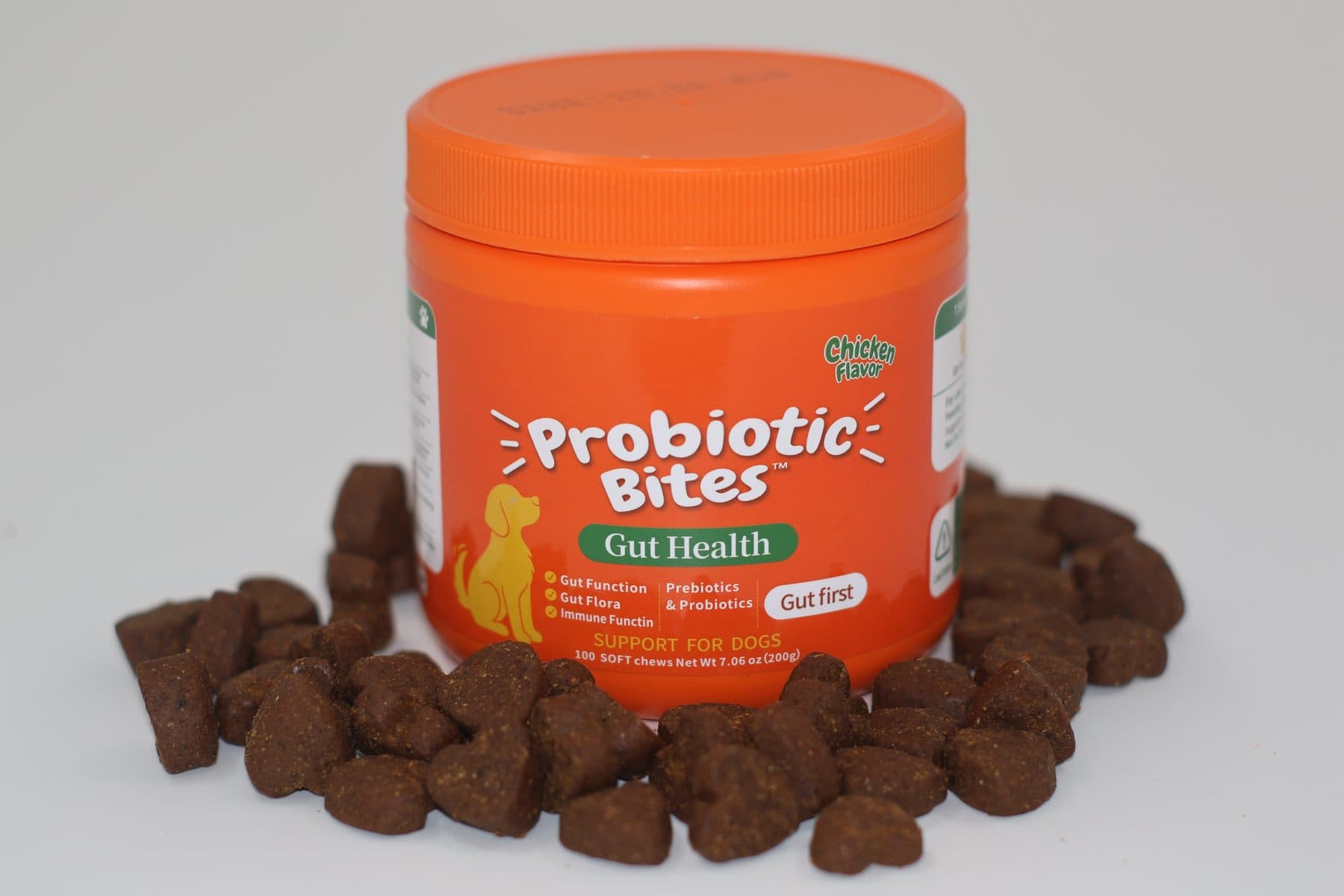
Digestive SKUs turn over faster than joint SKUs because an owner can see stool quality in a few days. That is why Doowoo keeps a digestive hub and Feelshine wrote a whole page on how to private-label gut products. The search demand is real. The manufacturing mistake is also real: people brief a meat chew "with probiotics" and expect a CFU number that survives extrusion, a humid warehouse, and a twelve-month shelf.
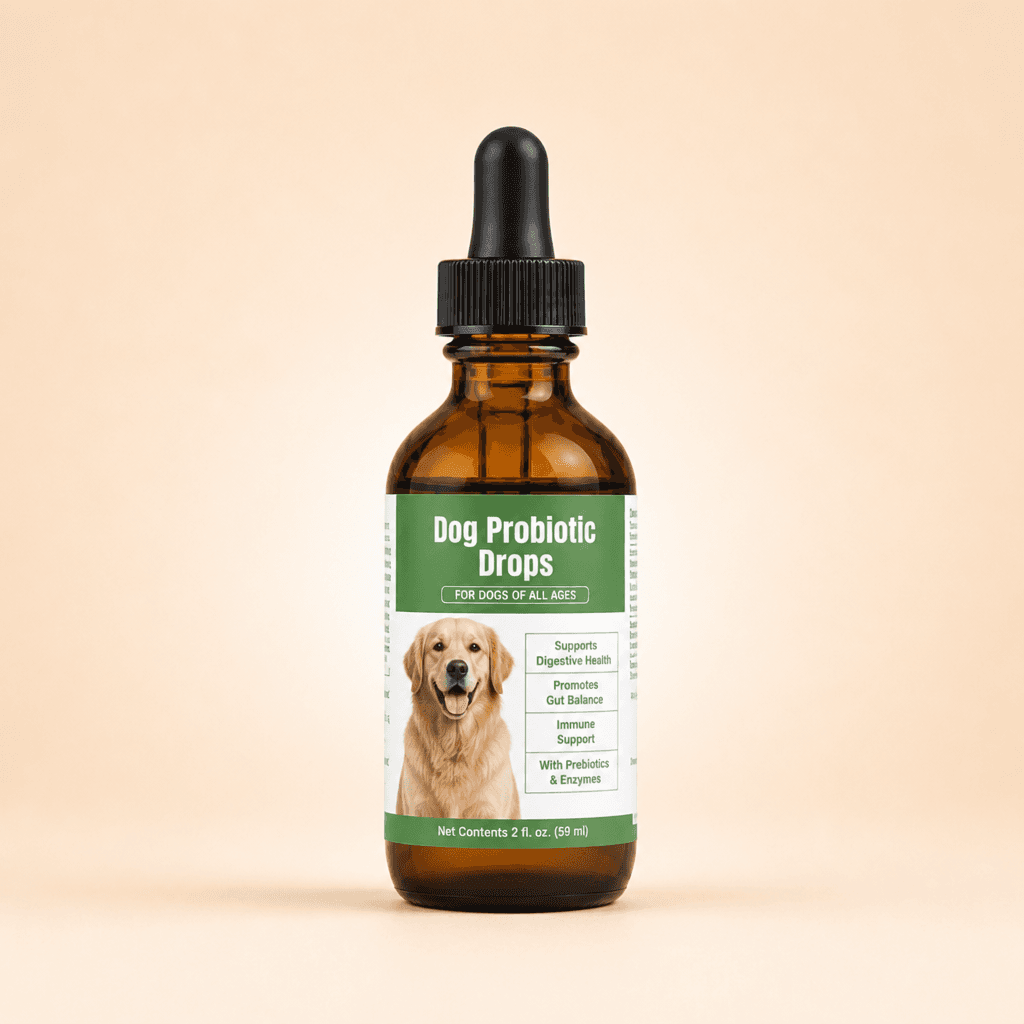
This page is how we run gut products at Beno. Stock options include probiotic gut health chews, probiotic powder and dog probiotic drops. Powder is usually the honest CFU story. The chew is the honest compliance story. Drops are a clinic or picky-cat story. The owner-facing version of the same category is benefits of probiotics for your dog.
CFU is a date, not a slogan
If the panel says 1 billion CFU, say at the end of shelf life, not at blending. Blending numbers are theatre. We plan an overage so the dated number is still true. That overage is cost. It belongs on the quote.
Genus is not strain. "Lactobacillus" on a sales deck is not a specification. A strain has a number. In the EU, only listed microorganisms are authorised for dogs and cats, and a strain cleared for one species is not automatically cleared for the other. If Europe is in the destination list, send that list in the first email. We will not discover it at artwork.
Spore-forming Bacillus survives chew processing and warehouse humidity better than many Lactobacillus cultures. That is a process fact, not a marketing ranking of "best probiotics." If your brand story needs a yoghurt-style Lactobacillus name, expect powder or a protected process, not a generic meat chew.
Prebiotic, probiotic, enzyme
Owners mix these words. Factories should not.
A probiotic is a live microorganism you are still counting at expiry.
A prebiotic is a fibre or substrate the resident flora can use. We often put pumpkin and a fibre in the chew because stool quality is what the owner scores. That is not the same as a CFU claim.
A digestive enzyme is a protein. Heat kills it. If enzymes are the hero, say so. They do not automatically belong in the same thermal step as a probiotic chew.
Synbiotic means you are combining live cultures and a prebiotic on purpose. It is a formula choice. It is not a reason to print three buzzwords on the front.
Format choice for a gut SKU
| Format | When it is the right first SKU | What goes wrong |
|---|---|---|
| Powder | You need a CFU number you can defend | Scoop dosing is messy; photos are weaker |
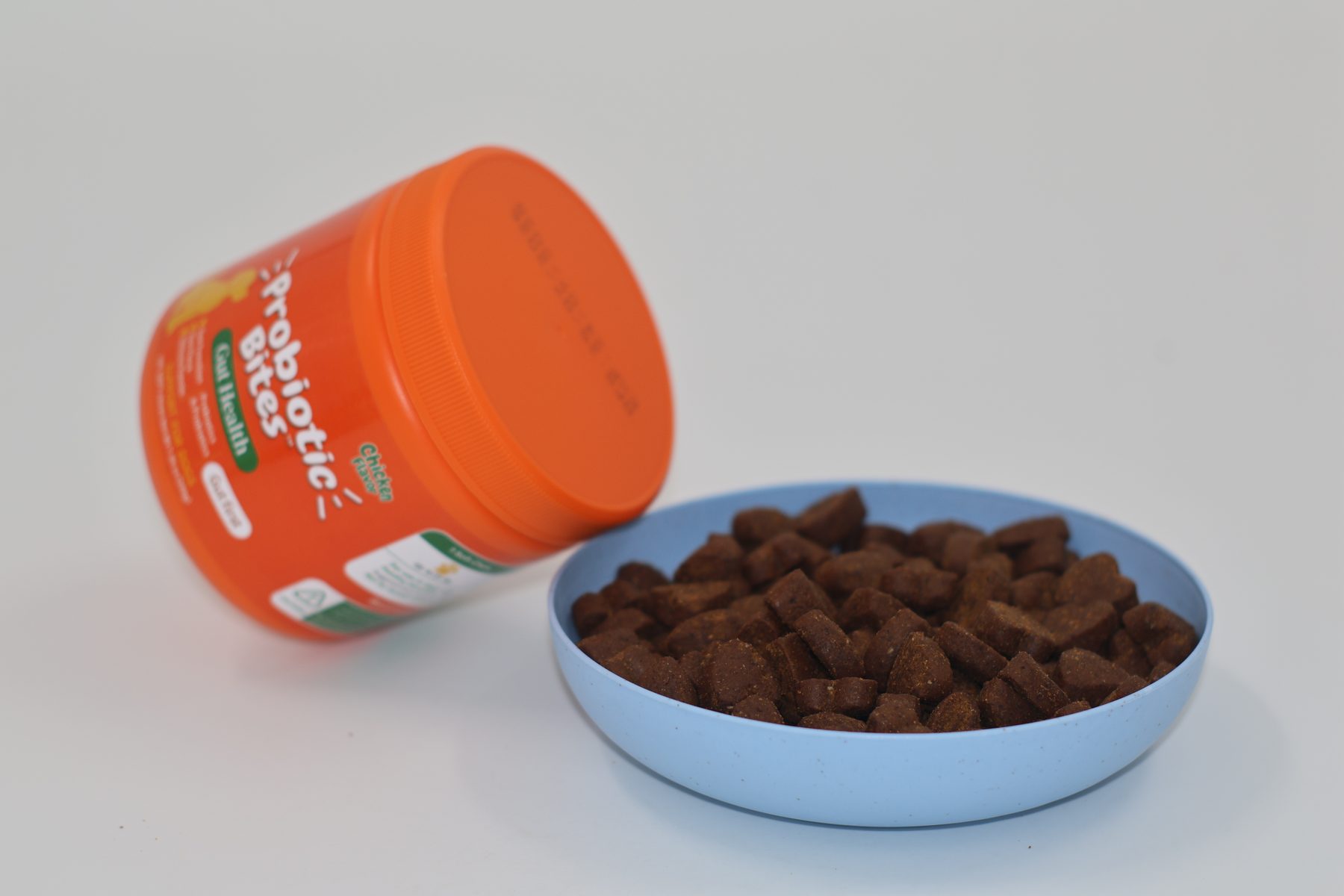
| Soft chew | You need daily use like a treat | Heat and water activity cut viable count |
| Drops | Cat or precise ml dosing | Fill components and stability of the liquid |
Dual-species labelling (dog and cat on one carton) widens the audience and wrecks the feeding table. Many buyers split artwork into two cartons on the same formula. That is a pack decision, not a new recipe.
Water activity has to stay low or viability drops before the tub reaches a shelf. If your market is tropical, say so. We will not find out from a mouldy complaint.
What we will not claim
We will not print "cures diarrhoea," "treats IBD," or "replaces veterinary care." Support for digestive wellness and stool quality is the lane. FDA CVM treats disease claims on animal products as drug claims. Read their animal food overview before you write Amazon bullets.
Pumpkin on a competitor listing is not a specification. If you want pumpkin, we can put it in. If you want a clinical protocol, you need a veterinarian, not a chew line.
Stock gut formulas follow the same commercial floor as other catalogue chews: 500 units on the quotation for the chew, samples in 7 to 15 days. CFU testing on a custom blend is extra time and a lab line on the invoice. Ask for it if the claim needs it. Do not assume a standard COA includes a full strain assay unless we wrote it down.
Send species, format and market on the form. If you are still choosing chew vs powder, read dosage forms first. A quote against "probiotic, you pick the form" is two quotes.
Sources
Frequently asked questions
- Should CFU be the number at blending or at expiry?
- At expiry. Blending counts are theatre. We plan an overage so the dated panel is still true. That overage is a cost line on the quote.
- Can I put a high CFU probiotic in a meat chew?
- Sometimes, with the right strain and water activity. Many Lactobacillus cultures do not survive extrusion and a humid warehouse. If the hero is a yoghurt-style name, start with powder.
- What is the difference between prebiotic and probiotic on a pet SKU?
- Probiotic means live organisms you still count at expiry. Prebiotic is a fibre or substrate. Pumpkin and fibre can support stool quality without being a CFU claim. Do not print both words as decoration.
- Is naming the genus enough, or do I need the strain?
- Genus is not strain. Lactobacillus on a sales deck is not a specification; a strain has a number. In the EU only listed microorganisms are authorised for dogs and cats, and a strain cleared for one species is not automatically cleared for the other. If Europe is in the destination list, send that list in the first email.
- Do digestive enzymes belong in the same chew as a probiotic?
- A digestive enzyme is a protein and heat kills it. If enzymes are the hero, say so in the brief. They do not automatically belong in the same thermal step as a probiotic chew. Synbiotic means combining live cultures and a prebiotic on purpose; it is a formula choice, not a reason to print three buzzwords on the front.
- Which format should a first pet probiotic SKU use?
- Powder when you need a CFU number you can defend, though scoop dosing is messy and photos are weaker. Soft chew when you need daily use like a treat, accepting that heat and water activity cut viable count. Drops for cats or precise ml dosing, where fill components and stability of the liquid are the work.
Stock formulas this guide maps to
These SKUs are already in production. Open a spec page or send the names in your inquiry.
 Soft chewsIn stock
Dogs & cats · Gut Health
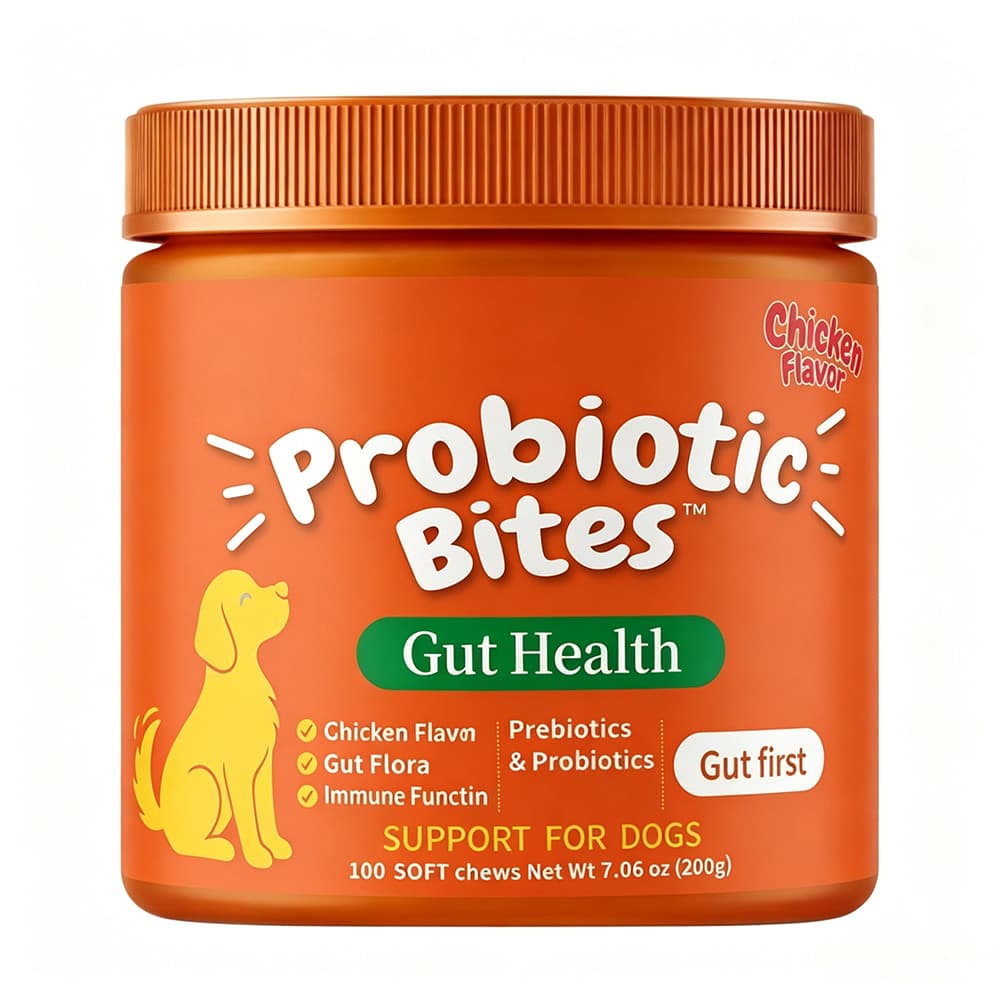
Probiotic Gut Health Chews
Daily digestive support in an easy-to-position chew format.
- Reference price
- US$2.40 per unit, ex-packaging
- Starting MOQ
- 3,000 units
 Powder
Dogs & cats · Gut Health
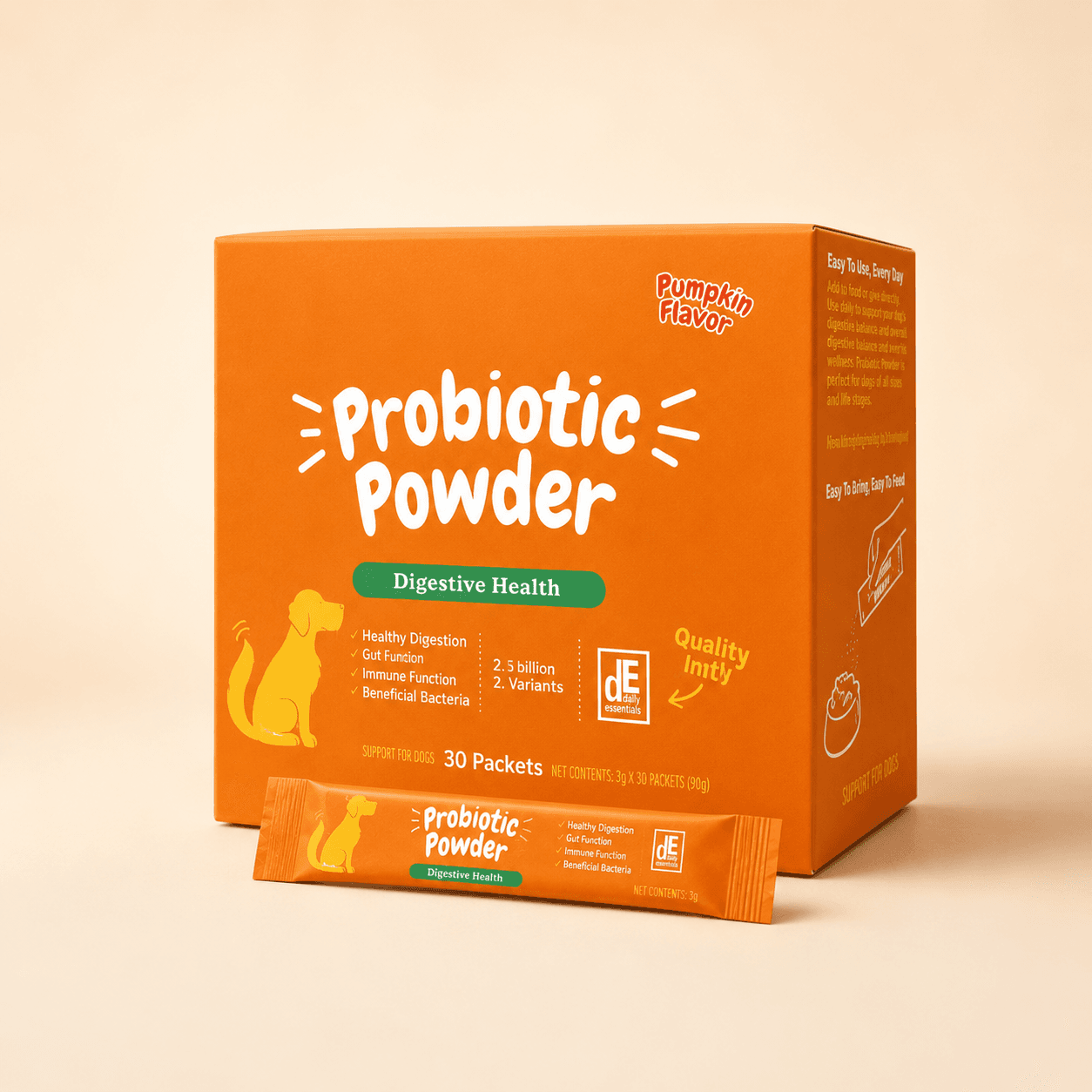
Pet Probiotic Powder
Shelf-ready digestive powder for dogs and cats.
- Reference price
- US$4.09 per unit, ex-packaging
- Starting MOQ
- 3,000 units
 Liquid drops
Dogs · Gut Health
Dog Probiotic Drops
Liquid probiotic support for dogs that refuse powders and chews.
- Reference price
- US$3.65 per unit, ex-packaging
- Starting MOQ
- 3,000 units
 Soft chews
Dogs · Specialty
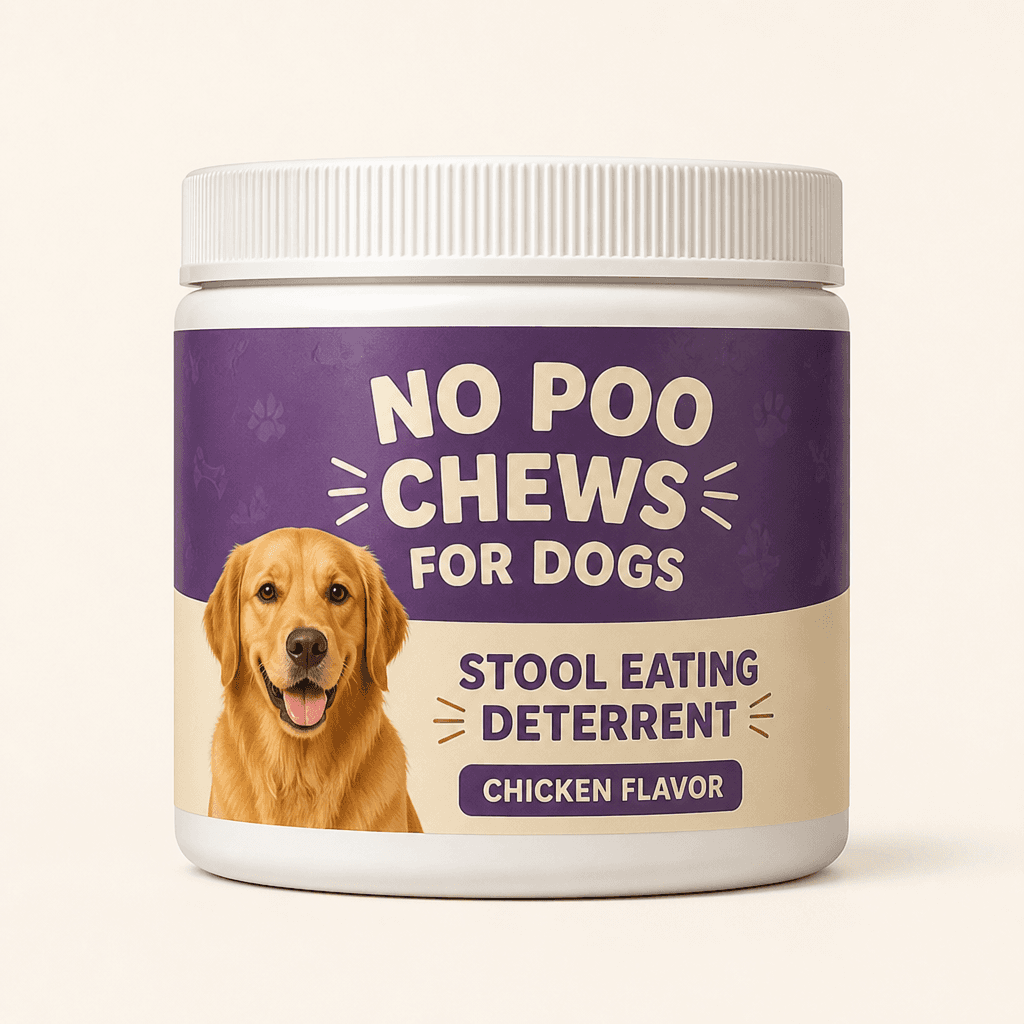
Anti-Coprophagia Chews
Palatable soft chews for stool-eating behavior support ranges.
- Reference price
- US$3.21 per unit, ex-packaging
- Starting MOQ
- 2,000 units
Turn this into a product
Send a brief and our OEM/ODM team confirms the route, MOQ and sampling path.