
Dog Probiotic Formats for OEM Buyers
クイックアンサー
Benefits of probiotics for your dog start in the gut. Live bacteria help keep the microbiome balanced, which shows up as better stools, easier nutrient uptake, and calmer skin. Powder, paste, and liquid each suit a different feeding habit. Choose a dog-specific formula and check CFU at expiry.
執筆 Beno · 監修 Prof. Wang Kai, Technical Advisor
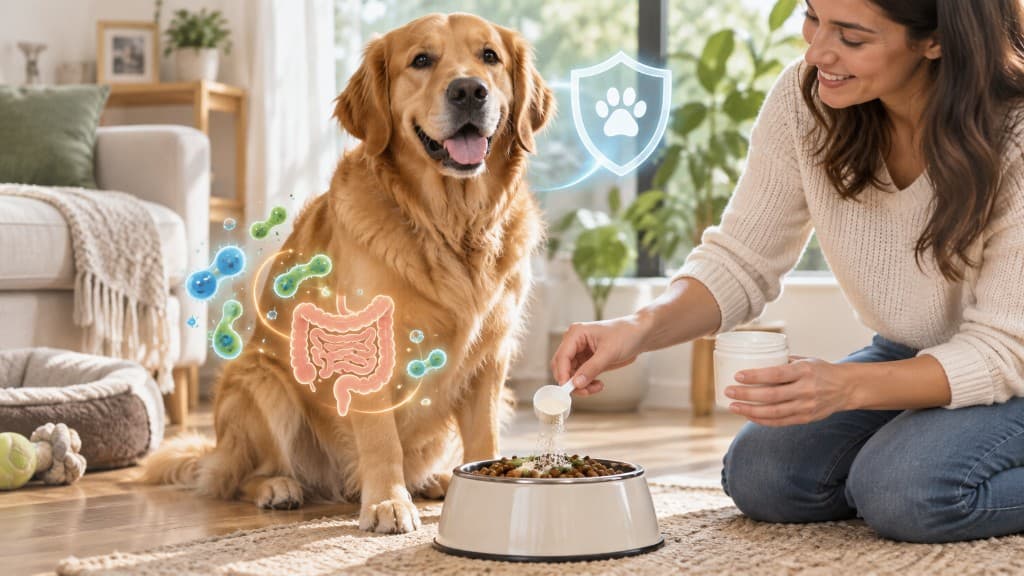
Benefits of probiotics for your dog show up first in the bowl and the yard: more regular stools, fewer gassy days, and a gut that recovers faster after a diet change or a round of antibiotics. The live bacteria in a dog probiotic are not a flavouring. They compete with unwanted microbes, help the gut lining do its job, and feed into immune and skin responses that start in the digestive tract.
Not every bottle does that work. Strain, format, and the CFU count still true at expiry matter more than the word "probiotic" on the lid. Human capsules are the wrong starting point. A product written for dogs, with a species on the panel, is.
This page covers what probiotics are, how they work, digestive and skin benefits, options for puppies, and how to choose a powder, paste, liquid, or chew. It is education, not a diagnosis. Persistent diarrhea, blood in stool, or sudden lethargy is a vet visit.
Dog probiotic formats for OEM buyers
Soft chews win compliance. Powder is usually the honest CFU story. Drops and pastes suit clinic or picky-dog feeding. Heat, moisture and shelf life decide which format can actually carry the strain you want to print. Compare the stock SKUs on the pet probiotic manufacturer page, then send format, destination and volume. Dog soft chew programmes can also start from pet soft chew manufacturing.
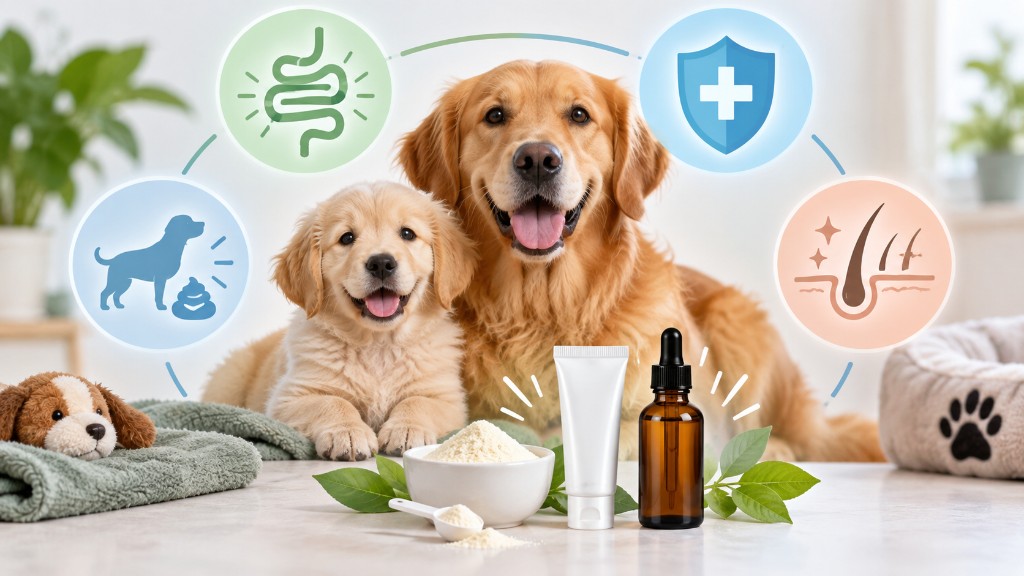
Understanding Probiotics for Dogs
Probiotics are live bacteria and yeasts that support a dog's gut when they arrive in useful numbers. The gut already holds a dense mix of microbes. When that mix is stable, digestion is boring in the best way: food in, formed stool out, coat looking ordinary.
Imbalance is what owners notice. Loose stools after a new kibble. Gas after table scraps. A puppy that unravels on the first boarding weekend. Antibiotics that clear an infection and also knock back the bacteria you wanted to keep. Probiotics are one way to restock the useful side of that mix.
They are not interchangeable. A strain that helps stool quality may do little for itchy skin. A spore-forming Bacillus that survives a chew plant is a different tool from a yoghurt-style Lactobacillus that prefers a dry powder. For how factories spec that difference, see the pet probiotic OEM guide.
Use a formula built for dogs. Human counts, human strains, and human capsules do not map cleanly onto a 6 kg terrier or a 35 kg retriever.
What Are Probiotics?
Probiotics are the friendly microbes that live along the digestive tract. In a dog supplement they are there to:
- Help keep the gut microbiome in balance
- Support the immune system that sits next to that gut lining
- Make it easier for the dog to use the nutrients already in the diet
They do not replace a complete food. They sit on top of it. When the balance holds, digestion runs with less drama: fewer watery stools, less straining, less of the sulphur smell that makes a walk unpleasant.
On a label, look for genus, species, and, when the brand is honest, a strain ID. "Probiotic blend" with no names is a marketing line, not a specification.
How Probiotics Work
Probiotics work by occupying space in the gut. Useful microbes take up room and resources that less helpful bacteria would otherwise use. Some strains also make short-chain fatty acids and B vitamins, and they help the gut wall stay a barrier instead of a leak.
In practice that means three jobs:
- Competing with unwanted bacteria
- Producing metabolites the gut can use
- Supporting the lining so food stays on the digestive side of the wall
You will not see this under a microscope at home. You will see stool that holds a shape, a dog that wants dinner, and, over weeks, a coat that looks less dull. That is the working definition of "how do probiotics help dogs" for most households.
Digestive Health Benefits
Digestive health is the reason most people buy a canine probiotic. A balanced gut flora is what lets the dog break down food and pull nutrients out of it. When that flora is off, you get diarrhea, gas, bloating, and stools that swing from too hard to too loose.
Dogs coming off antibiotics are a common use case. The drug did its job. The gut still has to refill. A course of probiotics after the last tablet is a practical way to restock, not a miracle.
Used daily, probiotics can help keep bowel movements predictable. That matters for apartment dogs, for training, and for anyone who has spent a week mopping. They are also used when a brand or a vet wants to support the gut lining over months, not only during a one-off upset.
Format is the next decision. Powder, paste, liquid, and chew all carry live cultures. They do not behave the same in a kitchen or in a warehouse.
Probiotic Powder for Dogs: A Gentle Digestive Aid
Probiotic powder for dogs is the format you stir into a meal. It adds almost no calories, which is why clinics and weight-managed dogs often prefer it to a treat.
Typical reasons to choose powder:
- Mixes into wet or dry food
- Easy to split a scoop for a small dog
- Usually the honest high-count format, because the process skips the heat and moisture of a chew
Sensitive stomachs often do better with a powder than with a fatty chew. Storage is the trade: once a tub is open, humidity eats the count. Sachets hold CFU better across a long course. Read the panel for CFU at end of shelf life, not the number at blending.
Canine Probiotic Paste for Digestive Issues
Probiotic paste is the short-course tool. A measured strip on the tongue or on a treat is easier than a pill when the dog already feels awful. Clinics like it because the dose is visible and the tube travels.
What paste is good at:
- A defined dose during a sudden digestive upset
- A higher concentration in a small volume
- Dogs that spit powder and ignore a chew
Paste is not Beno's stock SKU today. If you need that tube format for a brand, it is a custom brief, not a catalogue jar. For daily use, most households land on powder or a dog probiotic chew.
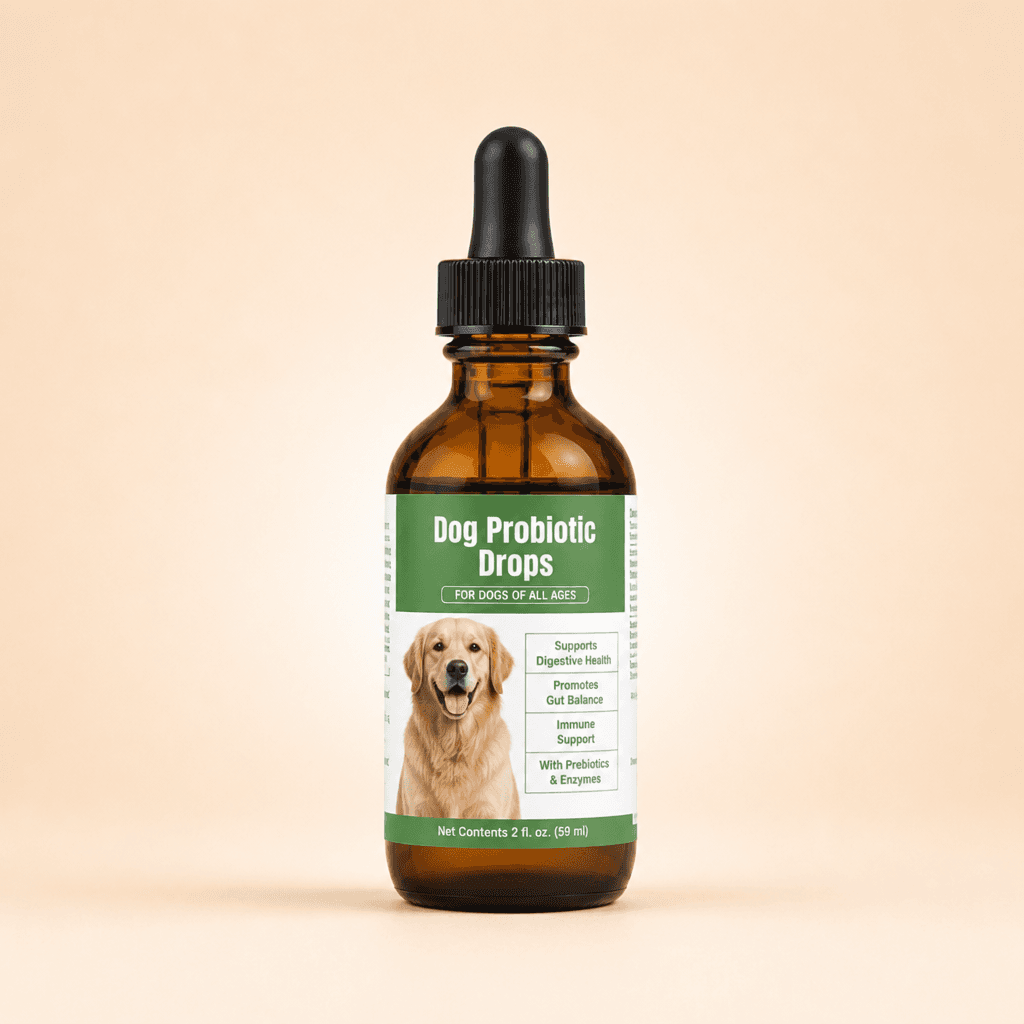
Liquid Probiotics for Dogs: Ease of Use
Liquid probiotics for dogs go into water or onto food. They suit dogs that refuse solids, and they suit owners who already dose other drops.
Why people pick a liquid:
- Fast to give with a meal
- No chew calories
- A format picky eaters will actually take
Live cultures in water are fragile. Spore-forming strains and a short in-use window after opening are how a liquid stays honest. Do not treat a dropper as a drug for gastroenteritis. It is a support product. Pair it in a range with the chew and the powder so the same gut story has three feeding habits.
Dog probiotic chews
A chew is the daily habit SKU. Owners remember a treat. They forget a scoop. Probiotic gut health chews exist for that reason: multi-strain cultures with prebiotic fibre and pumpkin, written as a dog-and-cat daily piece, not as a clinic paste.
The manufacturing catch is heat and water activity. Many Lactobacillus cultures die in a meat chew. Spore-forming Bacillus survives the line and the warehouse better. CFU on the pack should still be true at expiry. If the hero of the brand is a yoghurt-style count, start with powder and keep the chew as the easy daily piece.
Skin and Allergies Benefits
Skin is downstream of the gut. Itching, red patches, and a coat that looks tired often travel with a microbiome that is out of balance. Probiotics will not replace an elimination diet or a vet work-up for fleas and food allergy. They can support the gut–skin axis while you do that work.
A calmer gut often means less inflammatory noise at the skin. Owners report less scratching and a coat that lies flatter. During pollen season that can be the difference between a dog that sleeps and a dog that chews its paws at 2 a.m.
Some formulas are built with strains studied for skin barrier and immune tone. Others are generic digestive blends with "skin" on the carton. Read the strain list. If skin is the actual complaint, you may also want a dedicated allergy and immune chew beside the probiotic, not one overloaded piece that claims to do both at a decorative dose.
How probiotics show up on skin:
- Gut balance that feeds through to coat condition
- Less of the itch–scratch loop when inflammation is gut-led
- Immune tone that is less reactive to everyday allergens
Best Probiotics for Dog Skin Allergies
No single strain is "the" allergy probiotic. Research and clinic use often point to a short list:
- Lactobacillus casei — discussed for skin barrier support
- Bifidobacterium bifidum — discussed for lowering inflammatory tone
- Lactobacillus rhamnosus — discussed for immune response
Those names are a starting brief, not a shopping list. Availability depends on the market. The EU only authorises a defined list of microorganisms for dogs and cats, and a strain cleared for one species is not automatically cleared for the other. Ask for the strain ID and the CFU at expiry. "Supports skin" on a front panel is not the same as a named culture at a counted dose.
Probiotics for Dogs with Yeast Infections
Yeast on the skin or in the ears is a veterinary diagnosis. Probiotics do not replace antifungals. They are used to support a gut that is less welcoming to overgrowth, and to keep skin in better condition while the vet treats the site.
When yeast is on the chart, people look for products that:
- Include yeast-competitive cultures such as Saccharomyces boulardii
- Sit beside, not instead of, topical or systemic treatment
- Avoid dumping extra sugars into an already messy gut
Recurring yeast is a reason to check diet, folds, ears, and antibiotics history. A probiotic is part of that picture. It is not the whole picture.
High Potency Probiotic for Dogs and Allergies
"High potency" on a bag usually means a large CFU number. The number that matters is the one still true on the expiry date, after a humid warehouse and a kitchen cupboard. A blending count is theatre.
High-count products make sense for dogs with a long history of loose stools or reactive skin, and for short rebuilds after antibiotics. They also cost more, because overage is a real line on the formula. For a healthy adult on a stable diet, a daily chew or a modest powder is enough. Ask the vet before you jump to a clinical-strength count for a puppy or a dog with a chronic diagnosis.
Probiotics for Puppies
Puppies have an immature gut. New homes, new food, vaccines, and the first boarding weekend all shove that gut around. Probiotics for puppies are used to help the microbiome settle while the dog is still learning how to eat and how to be handled.
Useful outcomes in young dogs:
- Steadier stools during diet changes
- Better use of the calories you are already paying for
- Immune support while the puppy meets the world
Use a product labelled for puppies or with a weight-based dose, not a human capsule split with a kitchen knife. CFU, strain, and format still apply. A paste or a liquid is often easier than a chew until the puppy has adult teeth and a reliable sit.
Probiotic for Puppies with Diarrhea
Puppy diarrhea is common and still worth a phone call to the clinic if it lasts, if there is blood, or if the puppy is dull. Parasites, diet jumps, and stress are the usual suspects. Probiotics are a support, not a stool test.
For this use, people look for:
- Fast-colonising cultures such as Enterococcus faecium where the market allows them
- A format the puppy will take (paste, liquid, or powder in food)
- A plan to restore stool form over days, not minutes
Once stools hold, keep the daily probiotic through the next diet change rather than stopping the day the carpet is clean.
Do Puppies Need Probiotics?
Not every puppy needs a bottle. Plenty of litters do fine on a stable food and a quiet house. Probiotics earn their keep when the puppy has frequent digestive upsets, is changing food, is boarding, or is coming off antibiotics.
If you start one, start at the labelled puppy dose and tell the vet what you added. More CFU is not automatically kinder to a four-kilo gut.
Choosing the Right Probiotics
The right probiotic is the one that matches the dog in front of you: species, size, the actual complaint, and a feeding habit you will keep. Dog-specific formulas carry strains and doses written for canines. Broad "pet" lines can work if the panel splits dog and cat.
Check, in order:
- The health job (daily stool, short upset, skin, puppy)
- The format you will actually give (powder, chew, liquid, paste)
- Strain names and CFU at expiry, not a mystery blend
- Storage: fridge, cupboard, or use-within after opening
Chronic cases may need a higher-count powder. Itchy dogs may need named skin strains plus a separate allergy SKU. Healthy adults often do well on a daily chew. Introduce a new product over a few days and watch stool, itch, and appetite. If anything worsens, stop and call the clinic.
Quality is the boring part that decides whether the live cultures are still live. Reputable makers publish strain IDs, keep batch COAs, and do not print disease treatment on the carton. US animal products that claim to treat or prevent disease are a drug conversation at FDA's Center for Veterinary Medicine. Daily support wording is the legal lane. AAFCO model labelling is what many US states still use for treat-like packs.
If you are building a brand rather than buying a single tub, the manufacturing brief lives on the gut health probiotic OEM page. The owner-facing map across vitamins, coat, joints and gut is benefits of dog supplements for health.
Vet Recommended Probiotics for Dogs
A vet-recommended probiotic is usually one the clinic has seen work, with a label they trust and a strain list they recognise. That is a safety filter, not a brand religion. Clinics lean toward counted CFU, dog-specific panels, and formats they can dose in a consult: paste and powder more than a treat bag.
Ask your vet with the actual problem in the sentence: puppy diarrhea, post-antibiotic stools, yeast, itchy skin. A generic "best probiotic" question gets a generic shelf point.
Dog Probiotics Brands to Trust
Owners Google names they already see in clinics and on Amazon: Purina FortiFlora, Nutramax Proviable, Zesty Paws. Those searches tell you what the category looks like. They do not tell you those are the only honest products, and this site will not rank them for you.
Trust the panel:
- Dog (or dog and cat) on the front
- Named strains, not only "proprietary blend"
- CFU guaranteed through expiry
- A storage line you can follow
- No "cures diarrhea" or "treats allergy" claim
A private-label chew, powder, or drop from a GMP plant can carry the same strain families those retail names use. The difference is whose brand is on the lid. If you want to sell that lid, start from probiotic chews, probiotic powder, or liquid drops, and put market and species on the inquiry form.
How to Choose Supplements for Dog Digestive Problems
Digestive problems have causes. Food change, scavenging, parasites, antibiotics, and anxiety all look like "upset stomach" from across the room. A probiotic that helps a stress colitis may do nothing for giardia.
When you pick a digestive supplement:
- Name the symptom (gas, loose stool, scooting, vomiting) so the format and strain match
- Read the ingredient list for things your dog already reacts to
- Check that it fits the current diet (calories, flavour, with-or-without food)
Prebiotics (fibres the good bacteria eat) and probiotics (the live organisms) work together. Pumpkin and fibre can firm stools without being a CFU claim. Do not print both words as decoration. Introduce one change at a time, give it several days, and keep the vet in the loop if the dog is a puppy, a senior, or already on prescription food.
For the factory-side version of this choice — CFU at expiry, EU strain lists, chew versus powder — keep the pet probiotic OEM guide next to this page.
参考資料
よくあるご質問
- What are the benefits of probiotics for your dog?
- The usual benefits are more regular stools, easier recovery after diet changes or antibiotics, better use of the food you already feed, and, over weeks, calmer skin when the gut is part of the itch. They are a support product, not a treatment for disease.
- Do puppies need probiotics?
- Not every puppy does. They help most during food changes, boarding, vaccines, or a course of antibiotics, and when stools are frequently loose. Use a puppy dose or a weight-based panel, not a split human capsule.
- What probiotic format is best for dogs with diarrhea?
- Paste or liquid is easier to give during a short upset. Powder is the usual high-count daily rebuild. A chew is the habit SKU once stools are stable. Call the vet if diarrhea lasts, if there is blood, or if the dog is dull.
- Can probiotics help dog skin allergies?
- They can support the gut–skin axis and may reduce itch when the gut is involved. They do not replace flea control, an elimination diet, or a vet diagnosis. Look for named strains and a CFU count that is still true at expiry.
- Should I give my dog a human probiotic?
- No. Human capsules use different strains, counts, and doses. Buy a product formulated for dogs, with the species on the panel and a storage line you can follow.
Stock formulas this guide maps to
These SKUs are already in production. Open a spec page or send the names in your inquiry.
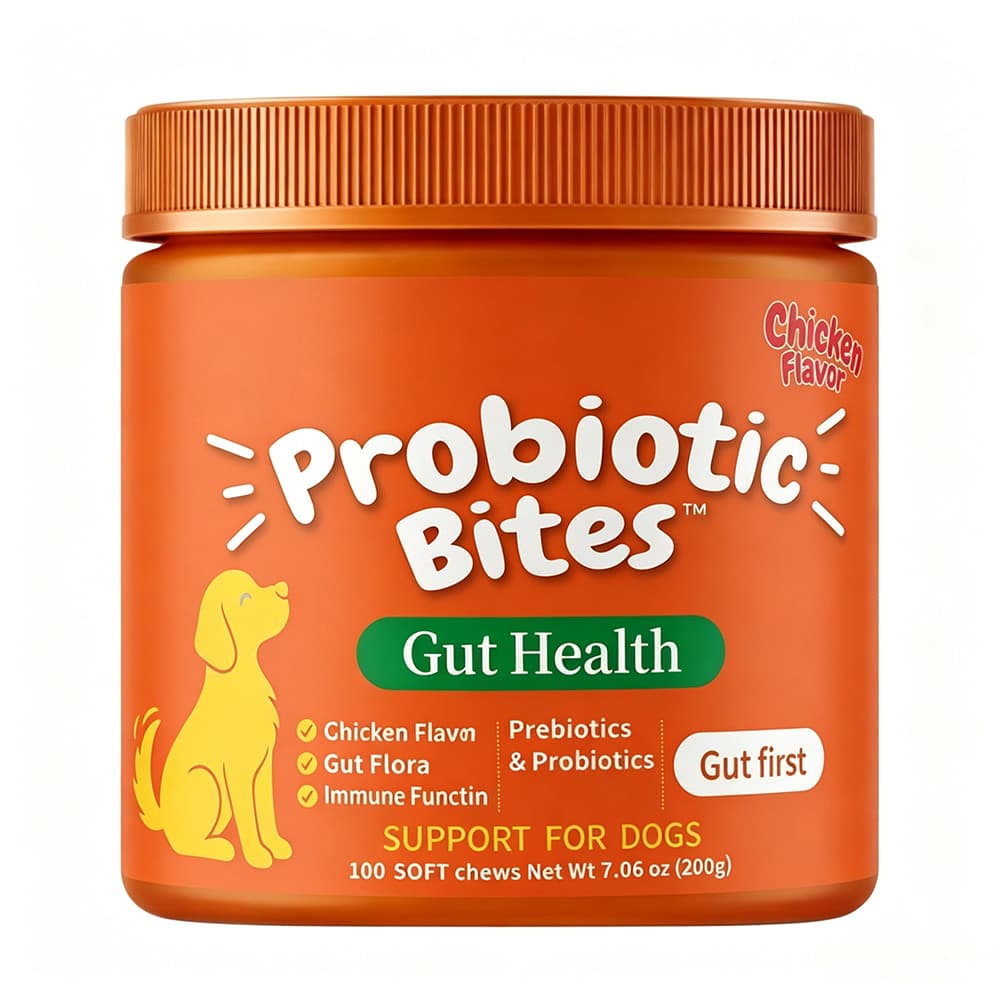 ソフトチュアブル在庫あり
犬猫兼用 · 腸内ケア
プロバイオティクス 腸内ケアソフトチュアブル
犬猫どちらのラインにも展開しやすい毎日の消化ケアです。
- 参考価格
- US$2.40 1 個あたり、パッケージ別
- 最低ロット
- 3,000 個
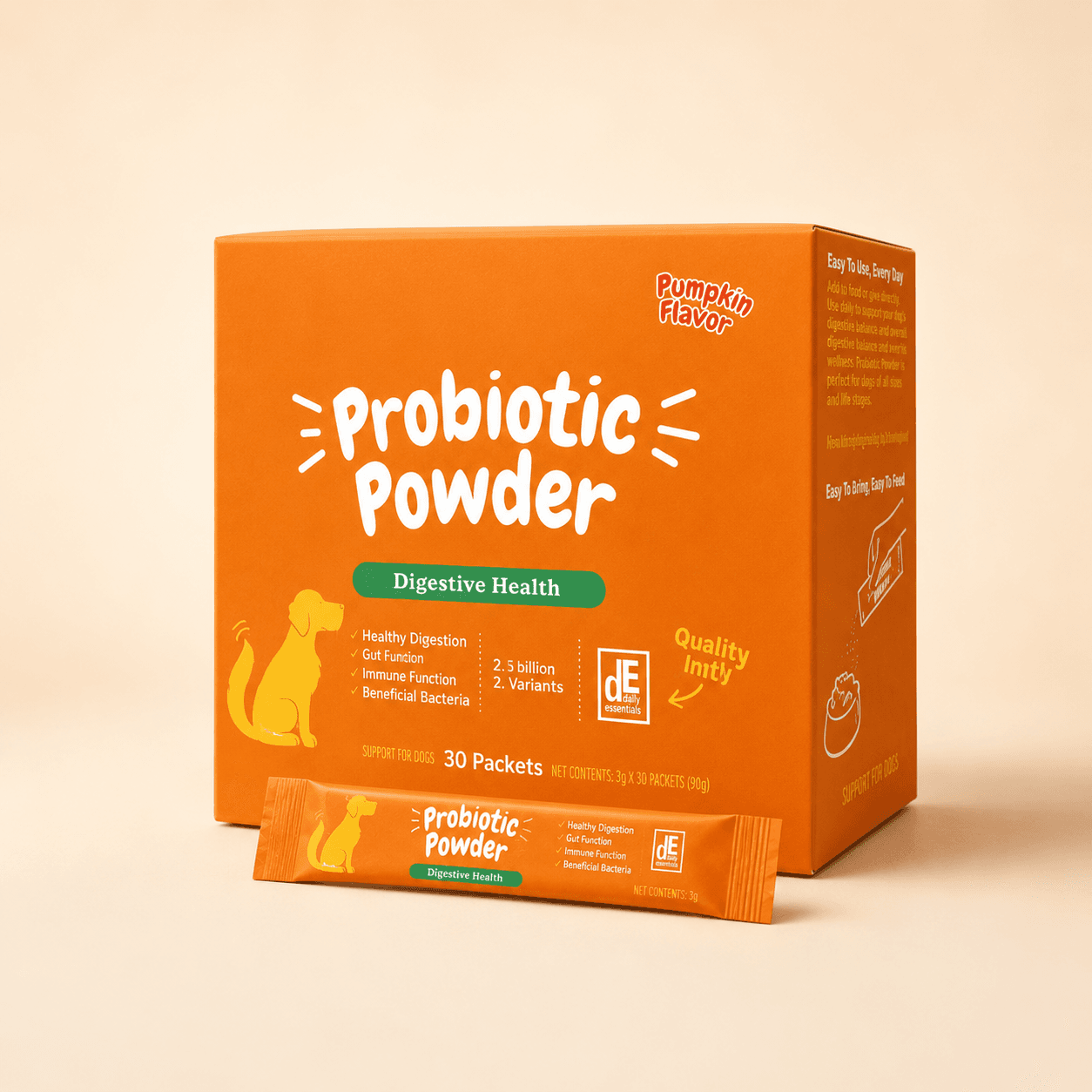 粉末
粉末犬猫兼用 · 腸内ケア
ペット用 プロバイオティクスパウダー
そのまま棚に並べられる犬猫兼用の消化ケアパウダーです。
- 参考価格
- US$4.09 1 個あたり、パッケージ別
- 最低ロット
- 3,000 個
 液体ドロップ
犬用 · 腸内ケア
犬用 プロバイオティクス ドロップ
粉末やチュアブルを嫌がる犬向けの液体プロバイオティクスです。
- 参考価格
- US$3.65 1 個あたり、パッケージ別
- 最低ロット
- 3,000 個
 ソフトチュアブル在庫あり
犬猫兼用 · 免疫サポート
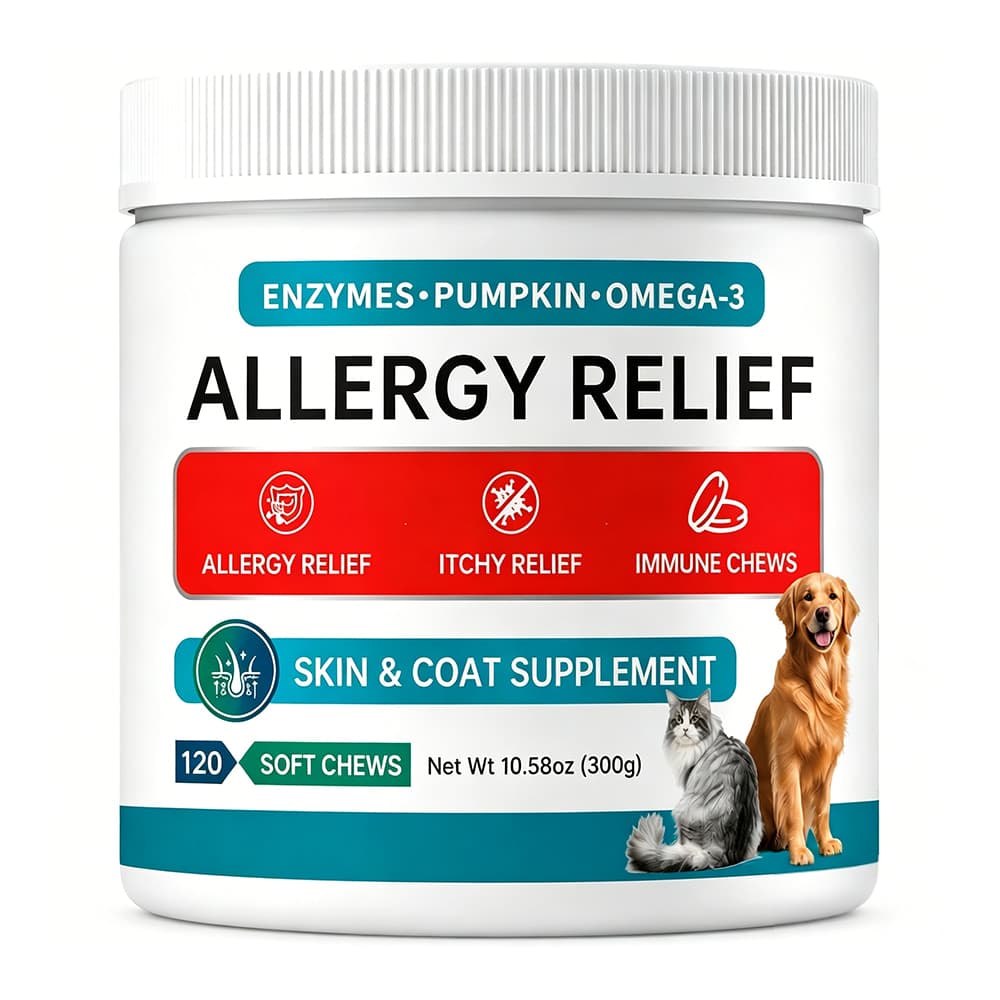
アレルギー&免疫ケア ソフトチュアブル
季節のコンディションと免疫を訴求するチュアブルタイプです。
- 参考価格
- US$2.89 1 個あたり、パッケージ別
- 最低ロット
- 1,000 個
製品化を検討しませんか
ブリーフをお送りください。OEM/ODM チームが進め方、MOQ、サンプル手順をご案内します。