Benefits of Choosing Private Label Dog Food
クイックアンサー
The main benefits of private label dog food are a faster route to market, lower infrastructure investment, greater control over branding and product positioning, access to manufacturing expertise, and the potential for stronger customer loyalty. These benefits are only realized when the manufacturer can demonstrate format-specific capability, ingredient controls, testing, traceability, and dependable supply.
執筆 Beno · 監修 Li Wang, General Manager
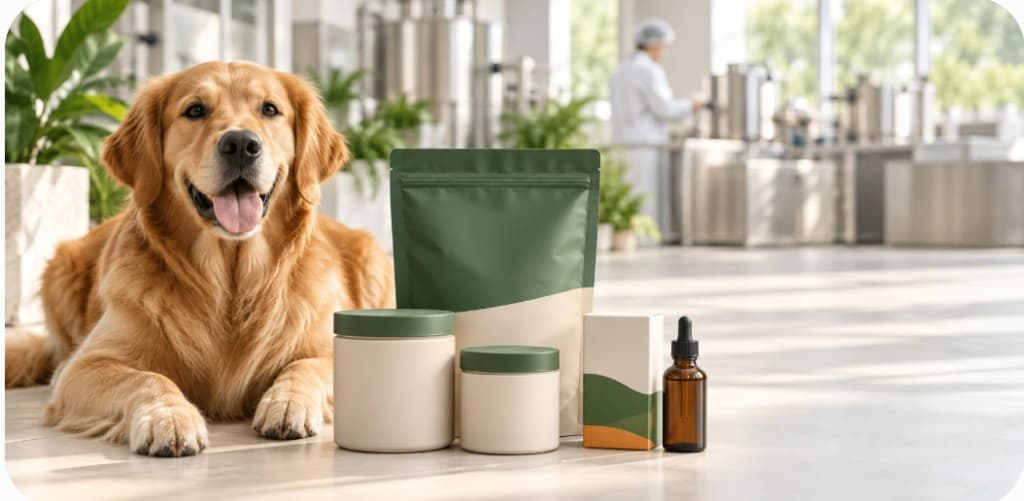
Private label dog food gives a pet brand or retailer the ability to sell a product under its own name while a qualified manufacturer handles production. For the right project, this model can shorten development, reduce capital requirements, support customized positioning, and create a product line customers cannot compare solely by brand name.
The label on the front, however, is only the visible part of the project. Long-term value depends on choosing the right product category, setting a defensible specification, controlling ingredients and processing, meeting U.S. labeling requirements, and building a reliable relationship with the manufacturer.
Product-category note. "Dog food" is often used online as an umbrella term for complete diets, treats, toppers, and supplements. These products are not interchangeable. BenoPet specializes in private label pet supplements and complementary formats rather than complete kibble, canned food, or frozen diets. A brand seeking complete dog food should appoint a manufacturer equipped and qualified for that specific food format. A brand extending its range with soft chews, powders, tablets, oils, drops, or pastes can explore BenoPet's private label and OEM/ODM services.
What Is Private Label Dog Food?
Private label dog food is manufactured by one company and sold under another company's brand. The manufacturer may also be called a co-packer or contract manufacturer. The brand owner controls the commercial identity of the product, while the manufacturing partner supplies some or all of the formula, ingredients, processing, packaging, quality documentation, and production capacity.
This model can cover several very different product types:
- Complete dog food: dry kibble, wet food, fresh food, frozen food, raw food, air-dried food, or freeze-dried diets intended to provide daily nutrition.
- Treats and toppers: products intended for supplemental or intermittent feeding rather than as the sole diet.
- Pet supplements: soft chews, powders, oils, tablets, liquids, pastes, and other products designed to support a defined wellness need.
Before requesting prices, a buyer should state exactly which category is required. A factory that makes canned food may not run extrusion for kibble. A freeze-dried treat plant may not formulate a nutritionally complete diet. A pet supplement manufacturer may have strong soft-chew and liquid capabilities without producing complete dog food.
In the United States, that distinction also affects formulation, labeling, intended use, and permitted claims. The U.S. Food and Drug Administration requires animal food to be safe, produced under sanitary conditions, free from harmful substances, and truthfully labeled. State requirements may also apply, often using model rules developed by AAFCO.
Advantages of Private Label Dog Food
1. More Control Over Product Positioning
A private label program lets the brand build a product around a defined customer and channel instead of reselling a manufacturer's consumer brand. Depending on the production route, customization may include:
- Product format and serving method
- Protein or functional ingredient direction
- Life-stage or lifestyle positioning
- Flavor, aroma, texture, shape, and piece weight
- Package type, count, net weight, and bundle configuration
- Label design and brand language
- Target retail price and margin architecture
The amount of customization varies. A stock product may allow only packaging and label changes. A modified formula may allow selected ingredient, flavor, or specification adjustments. A fully custom project may require formulation work, samples, pilot production, stability planning, and a larger commercial commitment.
For complete food, formulation changes must be evaluated as a complete nutritional and processing system. Replacing one ingredient can affect nutrient balance, palatability, texture, shelf life, and production performance. For supplements, the same discipline applies to active levels, serving size, ingredient compatibility, moisture, and stability.
2. A Faster Route to Market
Building a pet food plant requires equipment, technical staff, quality systems, supplier qualification, production planning, and ongoing compliance work. Private label dog food allows a brand to use an established manufacturing platform instead.
The fastest route is usually a formula the manufacturer already produces. Development takes longer as the project moves from a stock formula to a modified concept and then to a fully custom specification. Brands should therefore choose the least complex route that still delivers a meaningful point of difference.
A useful three-route model is:
| Production route | Starting point | Best suited to | Relative speed |
|---|---|---|---|
| White label | Fixed, ready-to-brand formula | Market testing and rapid launches | Fastest |
| Private label | Stock or proven base with brand and selected options | Differentiated branded ranges | Moderate |
| Contract manufacturing / ODM | Buyer specification or newly developed formula | Proprietary concepts and mature brands | Longest |
3. Better Use of Capital
Private label manufacturing converts much of the cost of owning a facility into an order-based production cost. The brand can invest more of its launch budget in packaging, inventory, sales, customer acquisition, and distribution.
That does not mean every private label pet food project is automatically inexpensive. Cost-effectiveness depends on the full commercial picture:
Formula + packaging + testing + development fees + freight + duties + warehousing + inventory risk = estimated landed cost
A low quoted unit price can become expensive if it excludes packaging, required testing, setup charges, freight, or realistic minimum quantities. Conversely, a higher unit price may be commercially stronger when it includes a proven formula, lower launch inventory, reliable documentation, and a package that is ready for the intended channel.
Compare like for like. Every quotation should identify the formula version, package specification, order quantity, testing scope, Incoterm or delivery basis, sample costs, lead time, and items excluded from the price.
4. Stronger Brand Loyalty and Margin Control
National brands can often be price-compared across many retailers. A private label product is exclusive to the company that owns the brand, making direct comparison more difficult and giving the seller more control over retail pricing, promotion, subscriptions, and bundles.
Brand loyalty does not come from placing a new logo on a generic bag. It grows when the product delivers a consistent experience:
- Reliable taste, texture, and appearance
- Clear feeding or serving instructions
- Packaging that protects the product and is easy to use
- Consistent stock availability
- Honest, understandable claims
- Responsive support when customers ask about ingredients or quality
The manufacturer affects all six. For that reason, quality records and communication are not back-office details; they are part of the customer experience and the brand's retention strategy.
5. Easier Portfolio Expansion
A capable private label pet food manufacturer can help a brand build a coordinated range rather than a single isolated SKU. A dog-focused company might begin with one food format, then add treats, toppers, or condition-specific supplements. A multi-species company may later explore private label cat food with feline-specific formulation and label requirements.
Expansion should still be deliberate. A dog formula should not simply be repackaged as a cat product, and a treat should not be positioned as a complete meal. Each SKU needs its own species, intended use, serving directions, claims, testing plan, and commercial specification.
6. Access to Manufacturing and Quality Expertise
Experienced private label pet food manufacturers can translate a commercial idea into a product that can be made repeatedly at scale. Their value may include supplier qualification, formulation, process selection, packaging compatibility, in-process controls, finished-product testing, batch coding, retained samples, and traceability.
The brand should define which responsibilities remain with the manufacturer and which remain with the brand owner. A contract should address specifications, change approval, nonconforming product, complaints, recalls, intellectual property, label responsibility, and access to records.
Why Quality Ingredients Matter
"Premium ingredients" is not a complete quality standard. A professional ingredient program starts with written specifications and evidence.
For each material that affects nutrition, safety, stability, or a label claim, the buyer should understand:
- The exact ingredient identity and intended function
- The approved supplier and country of origin, when relevant
- Acceptance criteria for composition and contaminants
- Whether a certificate of analysis is reviewed for each lot
- Which identity, microbiological, chemical, or nutritional tests are performed
- How the ingredient behaves during processing and storage
- What substitution or supplier changes require written approval
- How the lot can be traced into finished batches
The FDA notes that pet food ingredients must be safe and have an appropriate function. Federal labeling requirements include product identification, net quantity, the manufacturer's or distributor's name and place of business, and ingredients listed in descending order by weight. State rules may add further requirements. AAFCO also makes clear that it develops model language but does not itself regulate, test, approve, or certify pet food.
For U.S. buyers, "AAFCO approved" is therefore not a useful standalone answer. Ask the manufacturer which nutritional or ingredient standard the formula uses, how the intended use is supported, which state registrations may be needed, who reviews the final label, and what evidence supports any nutritional adequacy or wellness statement.
Ingredient and Quality Questions to Ask
- Can you provide the complete formula or an agreed technical specification under NDA?
- Which ingredients are critical to the product's nutritional or marketing position?
- How are suppliers approved, monitored, and changed?
- Which tests are performed on incoming materials and the finished batch?
- Does the certificate of analysis report actual batch results or only specification limits?
- How is shelf life established for this formula and package?
- What is the batch coding, retained-sample, complaint, and recall process?
- Who approves label claims and the final U.S. compliance review?
Private Label Pet Food Manufacturers USA: Understanding the Market
Brands searching for private label pet food manufacturers USA will encounter companies with very different equipment, product categories, minimum order quantities, and customer profiles. "Pet food manufacturer" is not one capability. The correct shortlist depends first on format.
The competitive pages supplied in this brief illustrate the range:
| Manufacturer example | Publicly stated focus | Potential fit to investigate |
|---|---|---|
| Simmons Pet Food | Wet food, dry food, and treats; facilities in the U.S. and Canada | Brands and retailers seeking established North American food production across major formats |
| Carnivore Meat Company | Raw frozen and freeze-dried pet food, treats, snacks, and meal mix-ins in Wisconsin | Premium raw and freeze-dried concepts requiring specialized processing |
| Totally Raw / Happee Dawg | Private label freeze-dried single-ingredient treats and raw products in California | Buyers exploring narrower treat catalogs or on-demand specialty products |
These examples are a market overview, not a ranking or endorsement. A website can help establish format fit, but qualification requires current documents, a written quotation, samples, and direct confirmation of capacity and commercial terms.
Criteria for Selecting a Manufacturer
Use the following criteria when comparing private label pet food manufacturers:
- Format fit: Confirm that the facility actually runs the required process—kibble extrusion, retort canning, pouch filling, freeze-drying, baking, cold processing, soft-chew forming, liquid filling, or another relevant method.
- Product classification: State whether the SKU is complete food, a treat, a topper, or a supplement and confirm the intended-use statement.
- U.S. market readiness: Ask how the company supports federal requirements, state registration, label review, facility documentation, and imported-product responsibilities where applicable.
- Formula route: Confirm whether the quote covers a shared stock formula, a modified formula, or a buyer-owned specification.
- MOQ and scale: Request minimums by SKU and package, pilot availability, normal batch size, maximum capacity, and reorder lead time.
- Quality evidence: Review the relevant audit certificates, sample specifications, example COA, traceability procedure, testing scope, and recall process.
- Packaging capability: Confirm material, barrier needs, package dimensions, fill tolerance, code location, case pack, palletization, and e-commerce durability.
- Commercial transparency: Require itemized inclusions, exclusions, payment terms, development fees, freight basis, and ownership of tooling and artwork.
- Change control: Establish whether the manufacturer may change ingredients, suppliers, processing conditions, or packaging without written approval.
- Business continuity: Ask about critical-ingredient backups, maintenance, alternate lines, inventory planning, and communication during delays.
A U.S. location can simplify freight, site visits, and coordination for some brands, but location alone does not prove product fit or quality. An overseas specialist may be commercially appropriate when the format, documentation, landed cost, and import plan are all suitable. The decision should be based on verified capability rather than a country label.
Private Label Dog Food vs. White Label Dog Food
The terms private label and white label are sometimes used interchangeably, so buyers should focus on what the supplier actually allows.
White label dog food normally refers to a fixed product that several sellers can purchase and place under their own brands. Customization is usually limited to the label or package. It is often the fastest and lowest-development route, but competing brands may sell essentially the same product.
Private label dog food may also begin with a stock formula, but it usually offers more control over packaging, specifications, flavors, serving formats, or selected formula details. Exclusivity is not automatic; it must be stated in the agreement.
A pet food contract manufacturer typically works to a more detailed buyer specification. This route may offer the greatest differentiation, but it normally requires more development, validation, time, and volume.
| Factor | White label dog food | Private label dog food | Contract manufacturing / ODM |
|---|---|---|---|
| Formula | Fixed shared formula | Stock base or selected modifications | Buyer specification or new development |
| Branding | Label and basic packaging | Broader brand and package options | Fully integrated with product brief |
| Launch speed | Fastest | Fast to moderate | Moderate to long |
| Development cost | Lowest | Moderate | Highest |
| Typical differentiation | Low | Medium | High |
| Exclusivity | Usually none | Only if contracted | Negotiated in contract |
| Best use | Early demand testing | Building a branded core range | Proprietary or highly specific concepts |
Pros and Cons of White Label Products
White label dog food can be valuable when speed, lower initial complexity, and market validation matter most. It allows a retailer or emerging brand to test a category before funding a custom formula.
The tradeoff is limited differentiation. The brand must create value through packaging, education, service, channel strategy, and customer experience because the underlying formula may also be available to competitors. Buyers should also confirm how formula changes are communicated and whether the supplier can maintain consistent ingredients and sensory characteristics over time.
Where BenoPet Fits in a Private Label Pet Product Strategy
BenoPet should be considered for the supplement and complementary-product portion of a pet brand—not represented as a producer of complete kibble, canned dog food, or frozen diets.

For brands that already sell dog food, BenoPet can support adjacent private label products in formats such as soft chews, tablets, powders, granules, liquids, oils, and pastes. Current product directions include joint, gut health, skin and coat, immune, daily nutrition, urinary, and dental support. Buyers can review the BenoPet wholesale supplement catalog or browse OEM product groups before submitting a brief.
BenoPet's published development model includes three routes:
- Production to a buyer-supplied OEM specification
- ODM development with formulation and sampling support
- A stock supplement formula placed under the buyer's brand
The company also describes support for flavor and physical-format adjustments, packaging and label development, samples, process control, finished-product inspection, batch records, quality documentation, and export coordination. Buyers should confirm the exact scope, MOQ, testing plan, lead time, and destination-market documents in the written quotation for each SKU. Quality information can be reviewed on BenoPet's manufacturing and certification page.
What to Include in a BenoPet Project Brief
For a faster technical and commercial review, provide:
- Target species and life stage
- Primary wellness benefit
- Preferred dosage form
- Destination market, including the United States if applicable
- Stock, modified, or custom formula route
- Target active ingredients or benchmark product
- Package type, net weight, count, and serving concept
- Estimated first order and annual volume
- Desired claims and sales channel
- Target launch date and sampling needs
A Practical Private Label Launch Process
Step 1: Define the Product Before Contacting Factories
Write a one-page brief covering species, category, format, intended use, price position, package, market, forecast volume, and non-negotiable claims. This prevents suppliers from quoting different products under the same name.
Step 2: Shortlist by Production Capability
Select manufacturers that already operate the process required for the product. Ask for a capability statement and relevant examples, then verify the manufacturing site rather than relying only on a sales-company profile.
Step 3: Compare Documents and Commercial Assumptions
Request certificates relevant to the facility and product, a sample specification, example batch COA, testing scope, MOQ, lead time, packaging assumptions, and price basis. Mark every cost as included, excluded, optional, or unknown.
Step 4: Evaluate Samples Against Written Criteria
Assess more than appearance. Record palatability, aroma, texture, piece or fill-weight consistency, packaging function, serving experience, and any required analytical results. Use the same evaluation sheet for every supplier.
Step 5: Approve Formula, Label, and Quality Agreement
Freeze the commercial specification before mass production. Confirm change control, approved claims, test methods, acceptance limits, shelf life, packaging, batch coding, ownership, and responsibilities for U.S. regulatory review.
Step 6: Plan the Reorder Before the First Launch
Set inventory triggers using production time, testing, freight, customs where relevant, and a safety-stock allowance. A successful launch can still lose customers if the first reorder is placed after stock is already low.
Final Thoughts on Private Label Pet Food
The real benefit of private label dog food is not simply owning the label. It is the ability to combine manufacturing capability with a clear market position, controlled specification, recognizable customer experience, and repeatable supply.
Start by defining whether the project is complete dog food, a treat, a topper, or a supplement. Then compare manufacturers on the process they actually run, the evidence they can provide, and the assumptions written into the quote. Choose white label for speed, private label for a balance of differentiation and efficiency, or contract manufacturing when the product truly requires a proprietary specification.
If your growth plan includes dog or cat supplements rather than complete food, send BenoPet a product brief with the target market, dosage form, formula route, packaging, and volume. The team can then confirm whether an existing formula, a modified concept, or a custom OEM/ODM project is the appropriate next step through BenoPet's private label and OEM/ODM services.
参考資料
よくあるご質問
- What is private label dog food?
- Private label dog food is produced by a manufacturer and sold under another company's brand. The manufacturer may provide a stock formula, modify an existing product, or manufacture to the brand owner's specification. The agreement should define formula ownership, packaging, quality requirements, change control, and responsibilities.
- Is private label dog food cheaper than creating a product from scratch?
- It can be. A stock private label formula usually requires less development time and capital than a fully custom product or an owned factory. Buyers should compare total landed cost, including packaging, testing, development, freight, duties, storage, and inventory risk—not only the quoted unit price.
- What is the difference between private label and white label dog food?
- White label dog food is typically a fixed formula sold to multiple brands with minimal changes. Private label dog food may provide more packaging, specification, flavor, or formula options. The terms are used inconsistently, so the contract and written specification matter more than the label used by the salesperson.
- How do I choose among private label pet food manufacturers in the USA?
- Begin with format fit, product category, MOQ, quality evidence, U.S. market support, testing, packaging capability, change control, lead time, and supply continuity. Request current documents and samples before relying on marketing claims or location alone.
- Does FDA facility registration mean a dog food is FDA approved?
- No. FDA regulates animal food, but a facility registration should not be presented as approval of a specific pet food. Buyers should separately verify ingredients, labeling, safety controls, testing, intended use, and applicable federal and state requirements.
- Can a private label dog food formula also be sold as private label cat food?
- Not automatically. Dogs and cats have different nutritional requirements, and the formula, intended use, directions, claims, and label must be reviewed for the target species. A manufacturer should provide a separate feline specification rather than simply changing the front label.
- Does BenoPet manufacture complete dog food?
- BenoPet's current public manufacturing offer focuses on pet supplements and complementary formats, including soft chews, tablets, powders, granules, liquids, oils, and pastes. Brands seeking complete kibble, canned food, raw food, or frozen diets should select a manufacturer with that specific food-processing capability.
- Can BenoPet support a supplement line for an existing dog food brand?
- Yes. BenoPet offers stock private label, OEM, and ODM routes for dog and cat supplements. Formula direction, dosage form, flavor, physical specifications, packaging, samples, quality documentation, and export requirements can be assessed against the brand's target market and order plan.
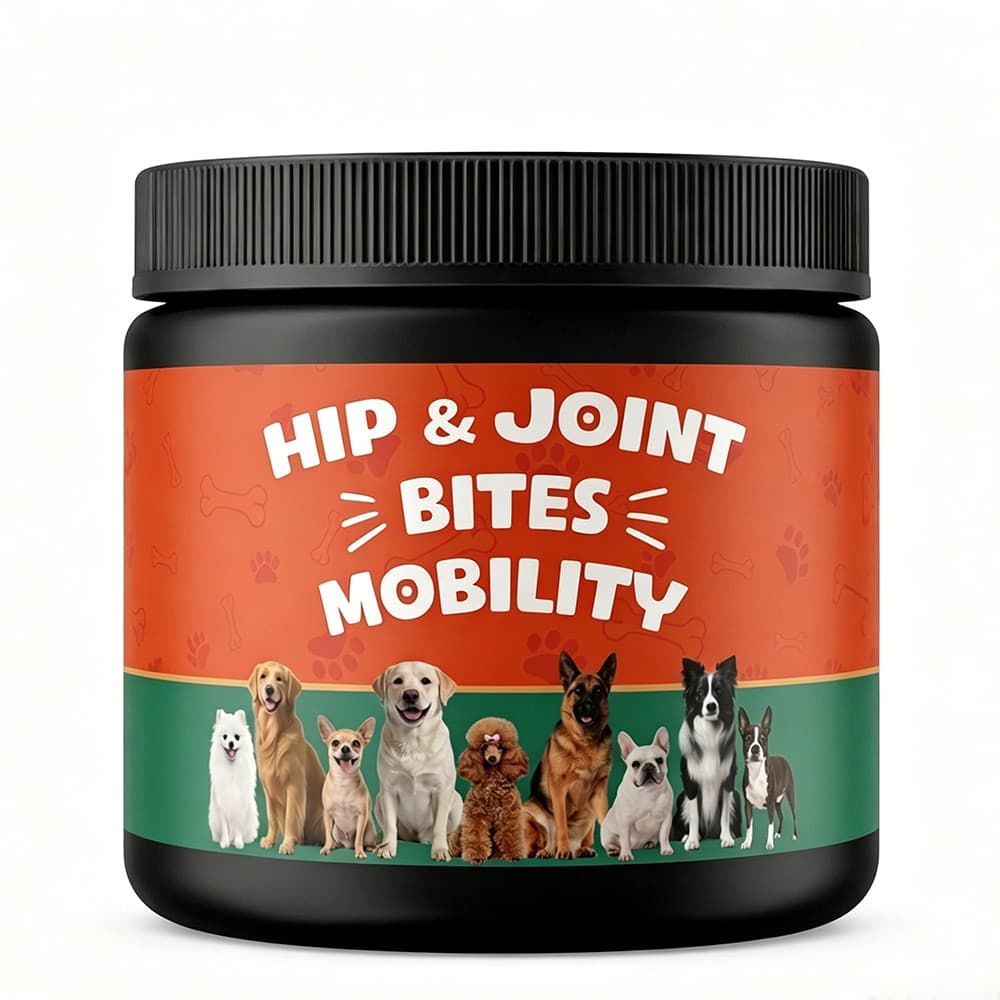
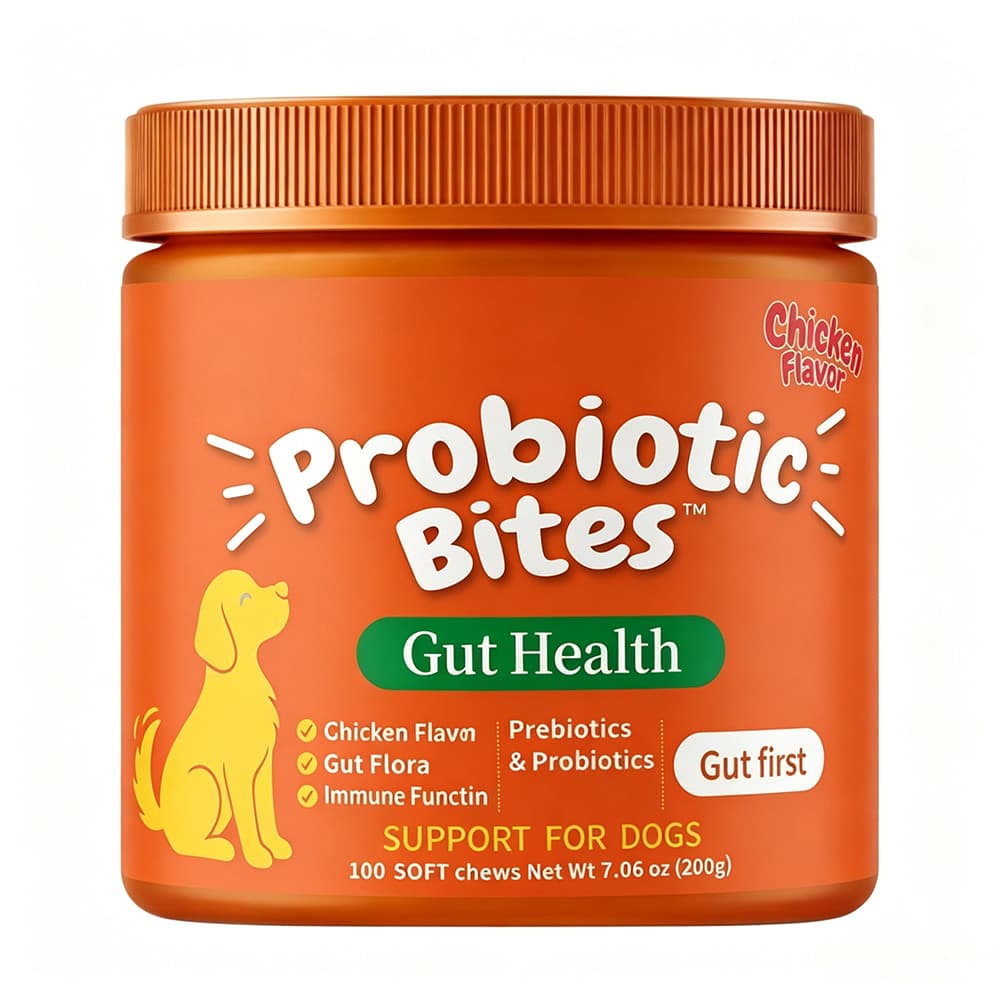
Stock formulas this guide maps to
These SKUs are already in production. Open a spec page or send the names in your inquiry.
 ソフトチュアブル在庫あり
 ソフトチュアブル在庫あり
犬猫兼用 · 腸内ケア
プロバイオティクス 腸内ケアソフトチュアブル
犬猫どちらのラインにも展開しやすい毎日の消化ケアです。
- 参考価格
- US$2.40 1 個あたり、パッケージ別
- 最低ロット
- 3,000 個
 ソフトチュアブル在庫あり
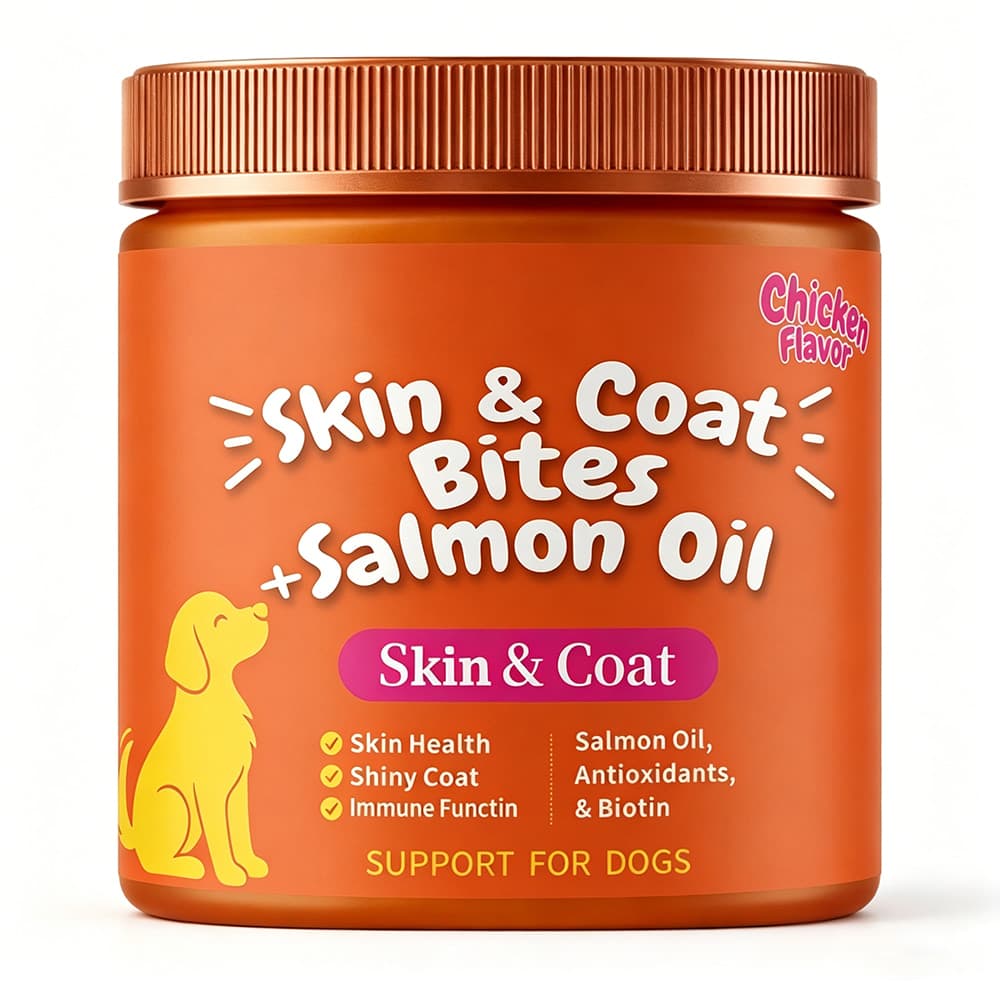
犬猫兼用 · 皮膚・被毛
皮膚・被毛ケア ソフトチュアブル+サーモンオイル
ビューティー&ウェルネス向けの被毛ケアソフトチュアブルです。
- 参考価格
- US$2.89 1 個あたり、パッケージ別
- 最低ロット
- 500 個
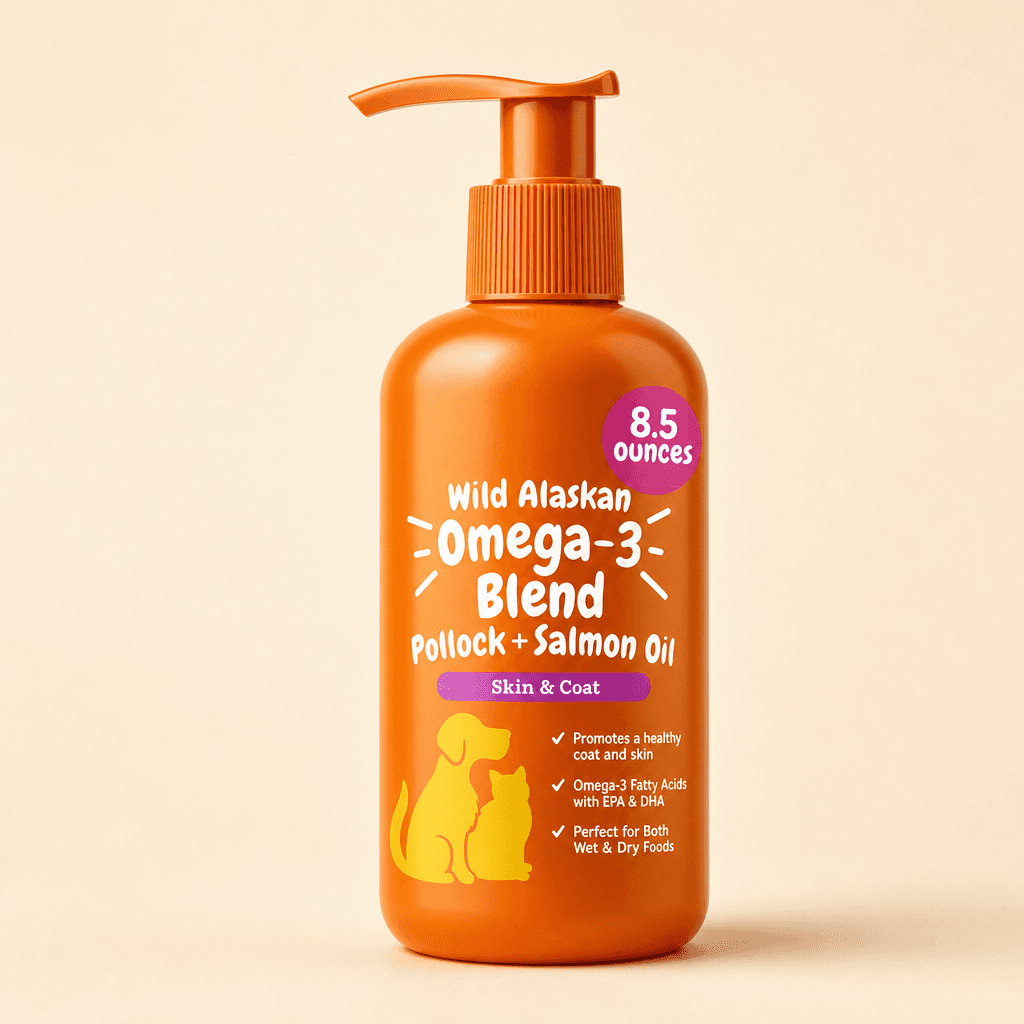 オイル
オイル製品化を検討しませんか
ブリーフをお送りください。OEM/ODM チームが進め方、MOQ、サンプル手順をご案内します。