Pet Supplement OEM Quality Control Checklist: 15 Checks Before Mass Production
Respuesta rápida
A pet supplement OEM should complete 15 checks before mass production. They cover the product, market, formula, materials, suppliers, species, sensory standard, serving, packaging, label, records, pilot, process controls, release, shelf life, and change control. This pre-production checklist is different from the shop-floor record used during the batch.
Por Li Wang, General Manager · Revisado por Prof. Wang Kai, Technical Advisor
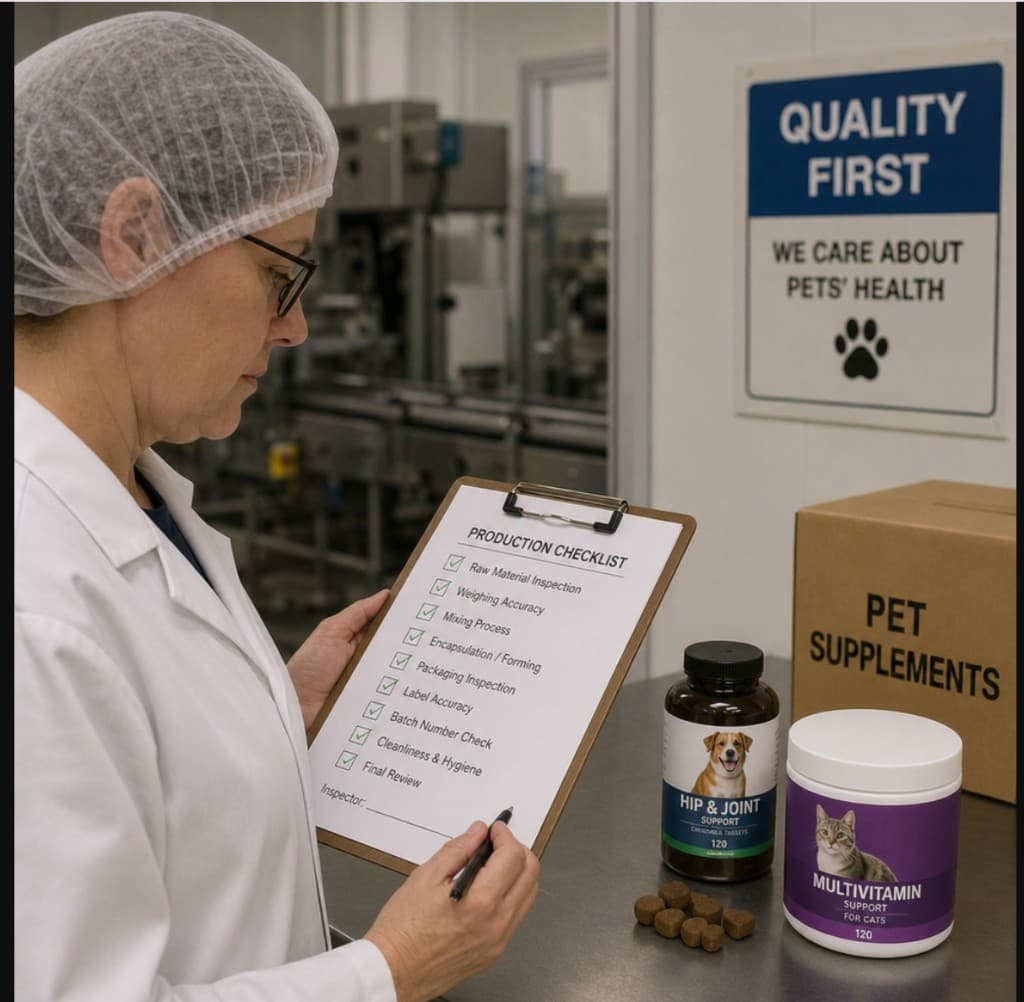
At Shenzhen Enbeichong, the brand and factory close one shared file before production. It confirms the approved formula, raw materials, packaging, label, testing plan, and production process for the exact SKU.
The goal is simple: the final product must match the approved sample and meet the agreed quality requirements.
For related guidance, see how to audit a pet supplement factory and how to read a pet supplement COA.
What should a pet supplement OEM quality control checklist include?
A complete checklist should cover market and species requirements, formula and process limits, supplier approval, packaging, labels, testing, shelf life, and signed change control. These checks form the pre-production gate within the factory's wider quality management system.
The checklist applies to soft chews, powders, tablets, pastes, oils, and liquid drops. Each dosage form has different manufacturing processes and quality control methods, but every project needs a clear specification before production begins.
Pre-production quality control protects the product, the pet, and the brand
Mass production increases the cost of every unresolved detail. A small error in flavor, dosage, artwork, or packaging can become a full-batch quality issue. Early review also helps the factory plan equipment, raw-material lead times, testing, and the correct product line.
Brands should separate fixed requirements from flexible preferences. An active-ingredient target may be fixed, while color, flavor, or chew shape may be adjustable. Clear decisions reduce corrective actions and keep customer expectations aligned with production limits.
The 15 checks before mass production
Every checkpoint should be completed, adapted, or marked not applicable with an owner and approval date.
1. Confirm the product category, market, and intended use
Confirm the species, life stage, dosage form, serving instructions, destination market, sales channel, and intended function. Regulatory requirements differ between markets such as the United States, the EU, and the UK, so the destination country should be named at the start.
2. Review the formula against brand requirements and manufacturing limits
Check ingredient levels, carrier roles, taste, texture, color, stability, and processing limits. The formula must work on the equipment that will produce it. Heat-sensitive ingredients, oils, probiotics, and high active loads may require a different format. See soft chews vs powders vs drops.
3. Qualify raw material suppliers before ordering production inventory
Use approved suppliers for critical raw materials. Review supplier history, specifications, source records, storage needs, and change-notification rules before buying production stock. New or branded ingredients may need extra review and longer lead times.
4. Verify raw material specifications and certificates of analysis
Match each COA to the approved specification and the physical lot. Check identity, strength, purity, moisture, microbe limits, contaminants, lot number, and expiry or retest date. A folder of unread certificates is not quality control.
5. Confirm ingredient suitability for the target animal
Review every ingredient and serving level for the animal named on the label. Cats are not small dogs, and a dual-species product must be assessed for both. Also check sensitive groups, warnings, and ingredients that may be unsuitable for pets.
6. Approve the sensory standard: appearance, odor, taste, and texture
Define an acceptable range for color, odor, taste, texture, shape, and visible defects. Keep an approved reference sample. Natural ingredients can vary, so a signed range is more useful than the phrase “looks good.”
7. Check dosage form performance and serving accuracy
Confirm piece weight, scoop size, fill volume, tablet strength, dropper accuracy, or paste viscosity as relevant. The serving method must be easy for the owner to follow and must deliver the stated amount consistently.
8. Review packaging compatibility and protection needs
Packaging must protect the product from moisture, oxygen, light, odor transfer, leakage, and transport damage. Review the container, closure, seal, liner, desiccant, scoop or dropper, label, and export carton as one packaging system.
9. Verify label content against the approved formula and claims
Check ingredients, directions, net contents, warnings, storage, and claims against the final specification. Avoid disease-treatment wording unless the product is legally authorized for it. Review the China, UK, and EU claims guide, and use only the approved artwork version.
10. Approve the master manufacturing record and batch documentation
The master record should list materials, quantities, equipment, process steps, in-process limits, packaging, and responses to deviations. Batch documents should also record lot numbers, yield, cleaning status, test results, and label counts.
11. Run and evaluate a pilot batch or trial production batch
A pilot on production equipment can reveal sticking, weight drift, cracking, separation, flavor loss, or packaging problems. Review line fit, consistency, waste, operator notes, and relevant test results before approving scale-up.
12. Define in-process controls for the production run
Set measurable controls for each dosage form. Soft chews may require weight, hardness, and moisture checks. Powders may require even-blend checks, while liquids need mixing and fill-volume controls. Each control needs a limit, frequency, record, and hold rule. See the quality control overview.
13. Establish finished product testing and release criteria
Agree on the test panel, limits, sampling plan, laboratory, and release authority before production. Testing may include physical properties, declared actives, microbial safety, heavy metals, or oxidation markers. The finished product should ship only after formal release.
14. Review stability, shelf life, and storage expectations
Shelf life should be supported by the formula, packaging, and available stability evidence. Oils can oxidize, probiotics can lose count, chews can dry out, and powders can clump. Storage instructions must match real warehouse and household conditions.
15. Complete final pre-production sign-off and change control
Approve the formula, specifications, suppliers, packaging, artwork, batch record, testing plan, pilot results, and production slot. After sign-off, any supplier, ingredient, process, or packaging change should follow written change control.
How should brands document and approve each checkpoint?
Use one controlled file with four fields for every decision: evidence, owner, date, and version. When the formula changes, reopen the label and specification. When packaging changes, reopen line testing and stability review. This data collection makes repeat orders easier and supports continuous improvement.
Red flags that a product is not ready for mass production
- The formula and label show different ingredients or serving levels.
- Supplier approval or raw-material documents are incomplete.
- The sample has no signed sensory range.
- Packaging was selected without compatibility review.
- A new formula or pack has no pilot result or written reason to skip it.
- Quality control processes have no measurable limits or hold rules.
- Release tests were not agreed before production.
- Shelf-life wording has no supporting plan.
- Changes are being managed through chat messages instead of a controlled file.
Best practices for working with an OEM manufacturer
Choose the correct route: private label for an existing formula, OEM for a brand-owned specification, or ODM for a new formula. Send the species, format, market, order volume, packaging, and fixed requirements in the first brief.
The pet supplement OEM guide explains the process step by step.
Ask which ingredient creates the greatest process risk, which tests apply to the target market, what must be approved before booking production, and what changes would require reapproval.
A practical pre-production checklist for brand teams
- Product definition and market confirmed.
- Formula version approved.
- Species suitability reviewed.
- Suppliers approved.
- Raw-material specifications and COAs checked.
- Sensory standard signed.
- Serving accuracy confirmed.
- Packaging system approved.
- Label matched to the formula.
- Master batch record prepared.
- Pilot evaluated or skip documented.
- In-process limits and hold rules defined.
- Finished-product testing and release plan approved.
- Shelf-life and storage approach documented.
- Final sign-off completed and change control active.
Turning quality control into a repeatable launch system
Strong supplement quality control is not one final inspection. It is a repeatable system of approved specifications, verified materials, clear production records, in-process checks, finished-product release, and retained evidence. Used early, this checklist helps ensure consistent final products and reduces avoidable delays.
Send your species, dosage form, destination market, order volume, and packaging needs through the manufacturing inquiry form.
Fuentes
Preguntas frecuentes
- What should a pet supplement OEM quality control checklist include?
- A complete checklist should cover market and species requirements, formula and process limits, supplier approval, packaging, labels, testing, shelf life, and signed change control. These checks form the pre-production gate within the factory's wider quality management system.
- What is the main purpose of a pre-production quality control checklist?
- It confirms that the approved product can be made, packed, tested, and released consistently before the factory commits materials and production time.
- Is a pilot batch always required?
- Not always. A proven stock formula in an approved pack may use existing process evidence. A new formula, ingredient, dosage, flavor, shape, or package should normally be tested on production equipment.
- Does every pet supplement need the same laboratory tests?
- No. The test plan depends on the formula, dosage form, claims, target species, and destination market. It should be agreed before production begins.
- Who approves the final label?
- The factory checks the label against the approved formula and production records. The brand remains responsible for destination-market claims and legal approval unless the contract assigns that work differently.
Stock formulas this guide maps to
These SKUs are already in production. Open a spec page or send the names in your inquiry.
 Snacks blandosEn stock
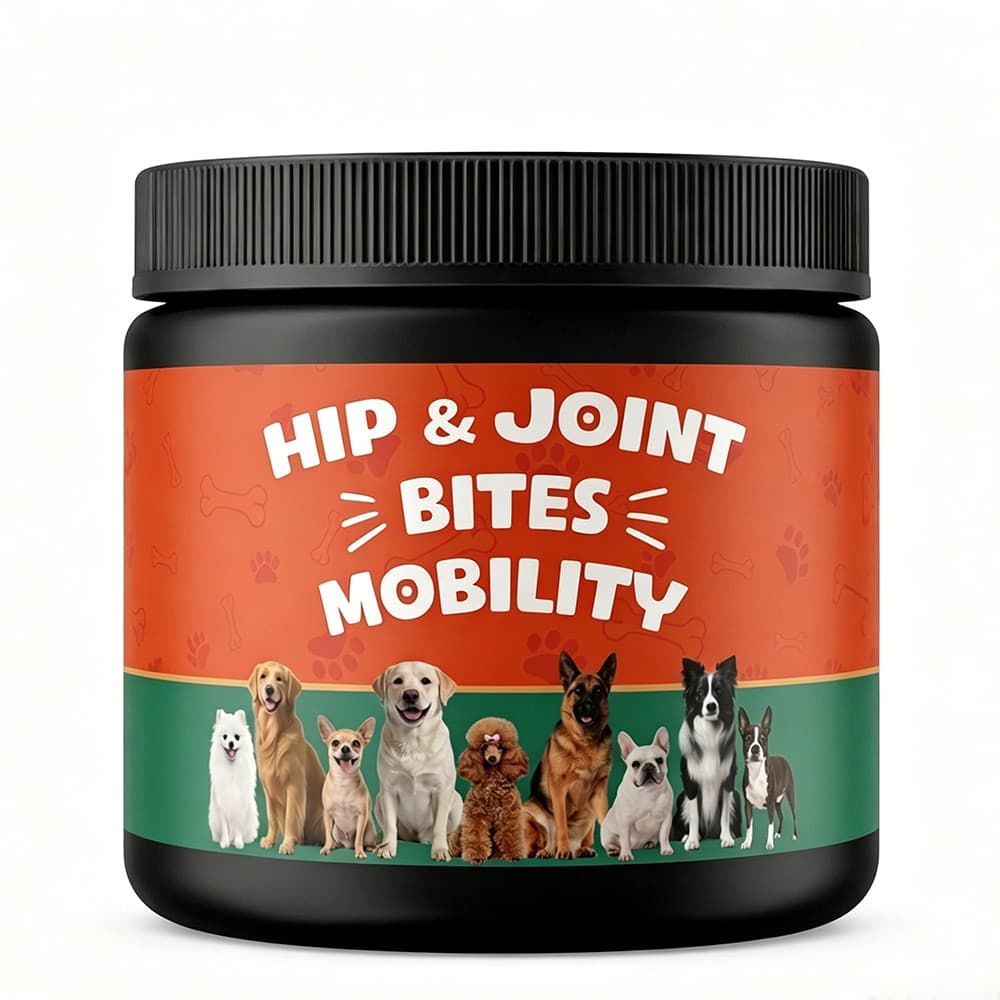
Perros · Cadera y articulaciones
Snacks blandos para caderas y articulaciones
Apoyo articular en snack blando para perros adultos y sénior.
- Precio de referencia
- US$4.09 por unidad, sin packaging
- MOQ inicial
- 500 unidades
 Snacks blandosEn stock
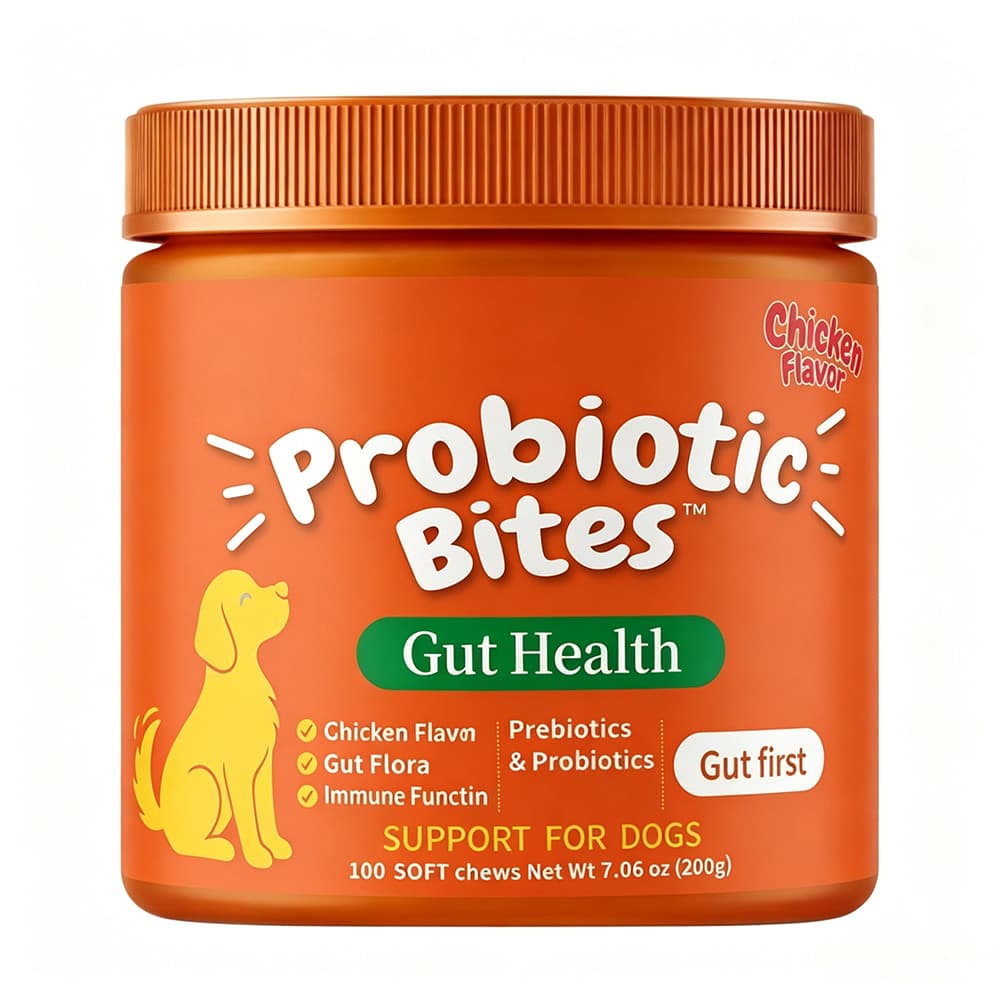
Perros y gatos · Salud intestinal
Snacks blandos probióticos para la salud intestinal
Apoyo digestivo diario en un formato de snack fácil de posicionar.
- Precio de referencia
- US$2.40 por unidad, sin packaging
- MOQ inicial
- 3,000 unidades
 Snacks blandosEn stock
Perros · Rutina diaria
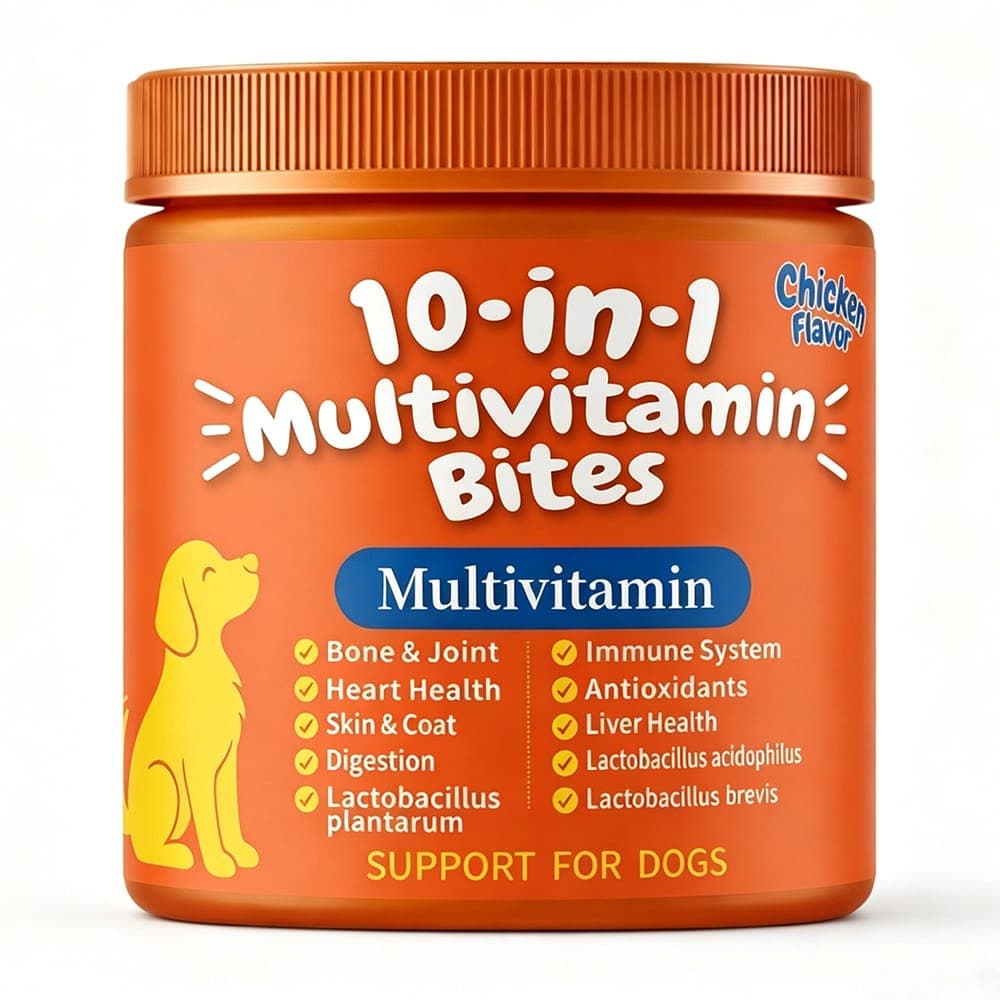
Snacks blandos multivitamínicos 10 en 1
Bienestar diario completo para líneas de suplementos de gran consumo.
- Precio de referencia
- US$3.09 por unidad, sin packaging
- MOQ inicial
- 500 unidades
 Polvo
PolvoPerros y gatos · Salud intestinal
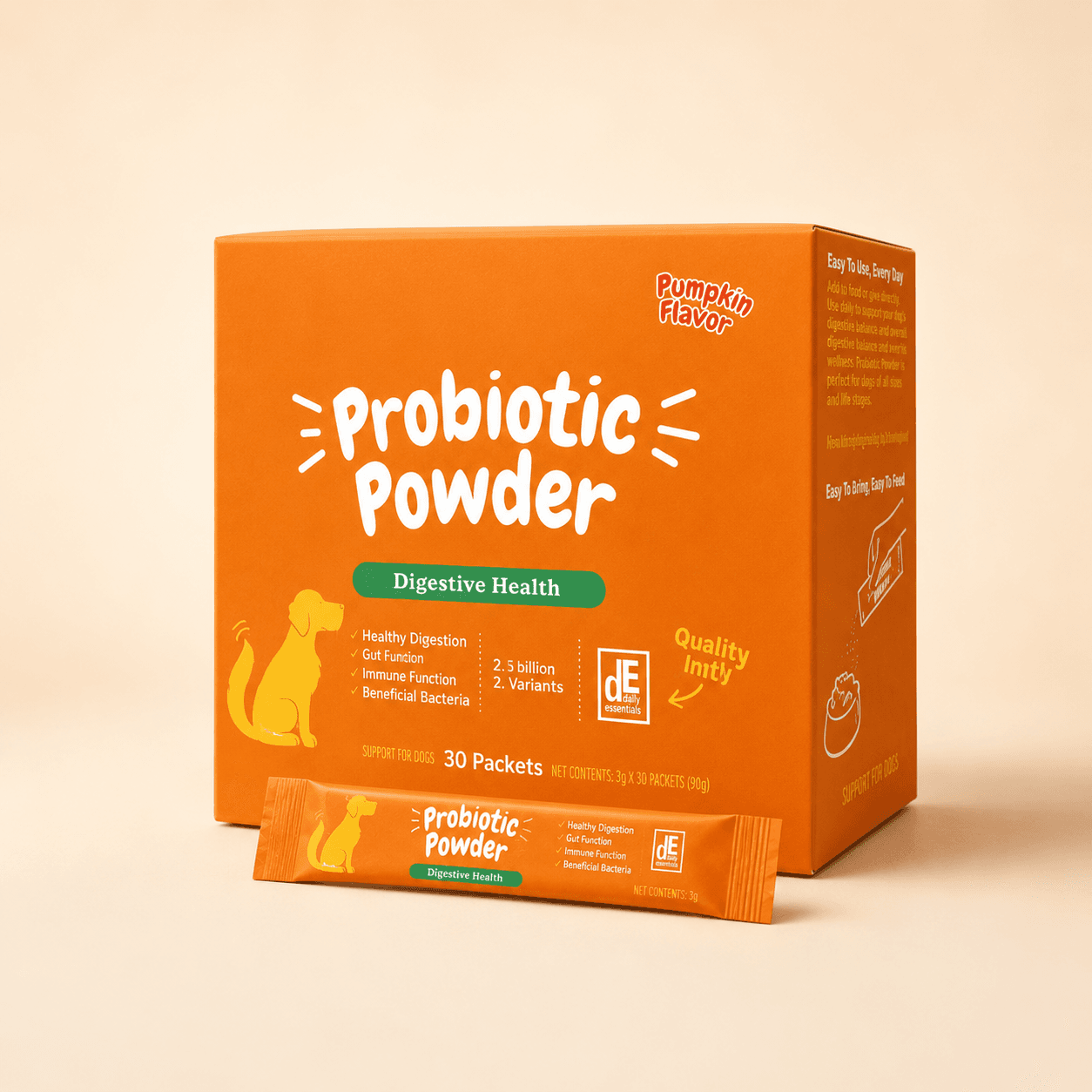
Polvo probiótico para mascotas
Polvo digestivo listo para el lineal, para perros y gatos.
- Precio de referencia
- US$4.09 por unidad, sin packaging
- MOQ inicial
- 3,000 unidades
Conviértalo en un producto
Envíenos un briefing y nuestro equipo OEM/ODM confirmará la vía, el MOQ y el proceso de muestras.