Dog joint chews for private label: what belongs in the first SKU
Quick answer
A first dog joint private-label SKU is usually a soft chew with glucosamine, chondroitin and MSM. Green-lipped mussel needs a cold-formed process. Dose by bodyweight or unit cost lies. Do not print disease treatment. Beno stock chews start at 500 units with 7 to 15 day samples.
By Beno · Reviewed by Prof. Wang Kai, Technical Advisor
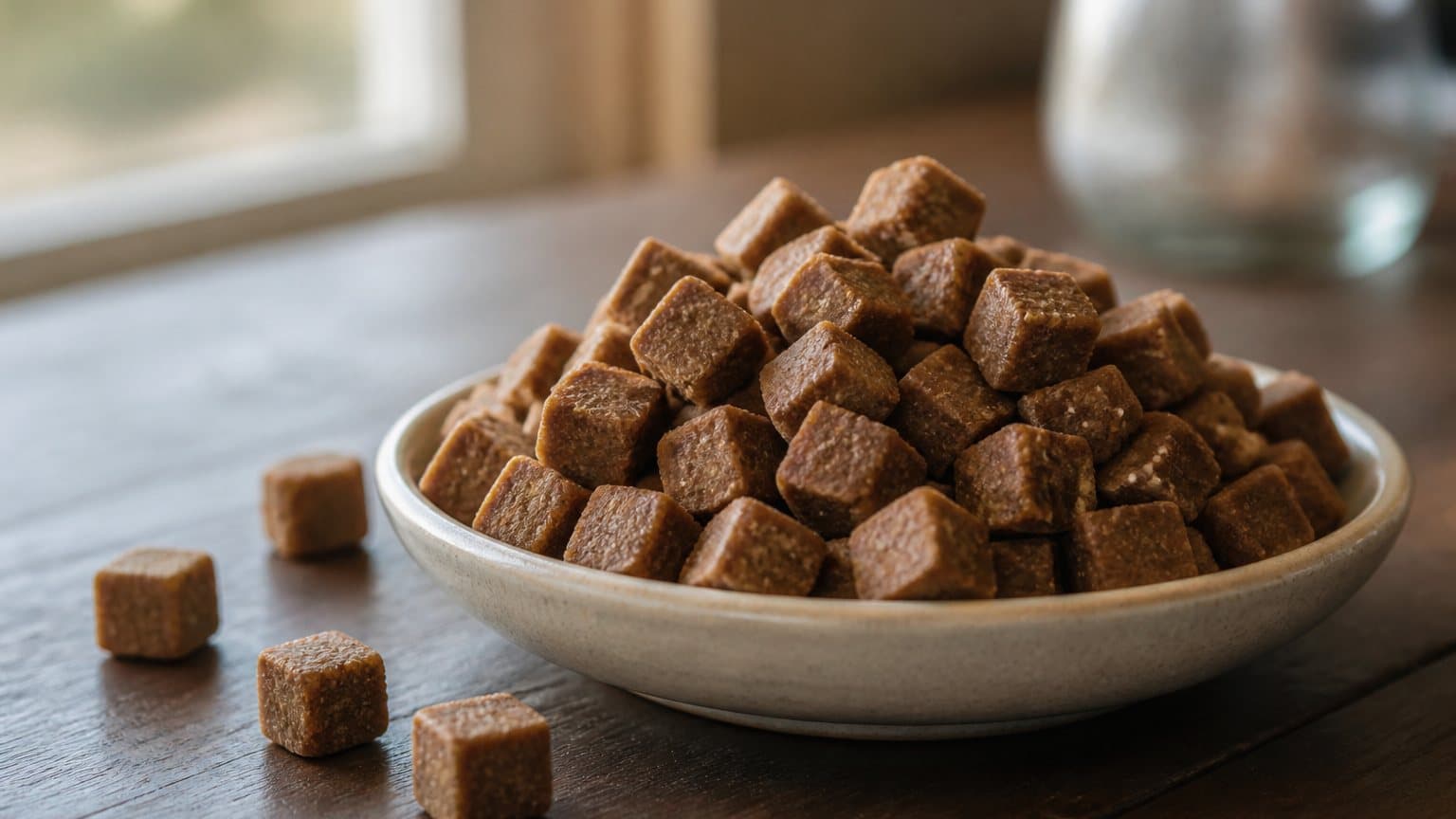
Dog joint chews for private label are usually the first SKU that has to work. Shoppers type glucosamine into Amazon. Clinics ask what is in the piece. A distributor wants one mobility SKU they can reorder. That is why Feelshine, Doowoo and Pet Tech Labs all keep a dedicated joint page. This one is the factory version: what goes in the chew, what the process can actually hold, and what we will not print on the pack.
I write this from Shenzhen Enbeichong. We already run hip and joint mobility chews as a stock formula, plus glucosamine tablets when a clinic channel wants milligrams on a score line. None of that is a treatment for arthritis. In the United States, a product that claims to treat or prevent disease is a drug. The US Food and Drug Administration's Center for Veterinary Medicine says so in plain language on its animal food pages. Keep the carton on mobility, comfort and daily joint support. Send the medical wording back to counsel.
What buyers actually put in a first joint chew
The stack you see on almost every private-label brief is not mysterious.
Glucosamine (often HCl or sulfate) is the name owners recognise. Ours is normally crustacean-derived, so several markets need allergen wording. If you need a non-shellfish story, say so in week one. That is a sourcing change, not a label tweak.
Chondroitin sulfate sits next to it because retail buyers expect the pair. It is bulky. In a chew, every milligram fights the meat matrix for space.
MSM (methylsulfonylmethane) is cheap, sulfur-smelling if you overdose the flavour system, and easy to over-claim. We dose it as a support ingredient, not as the hero.
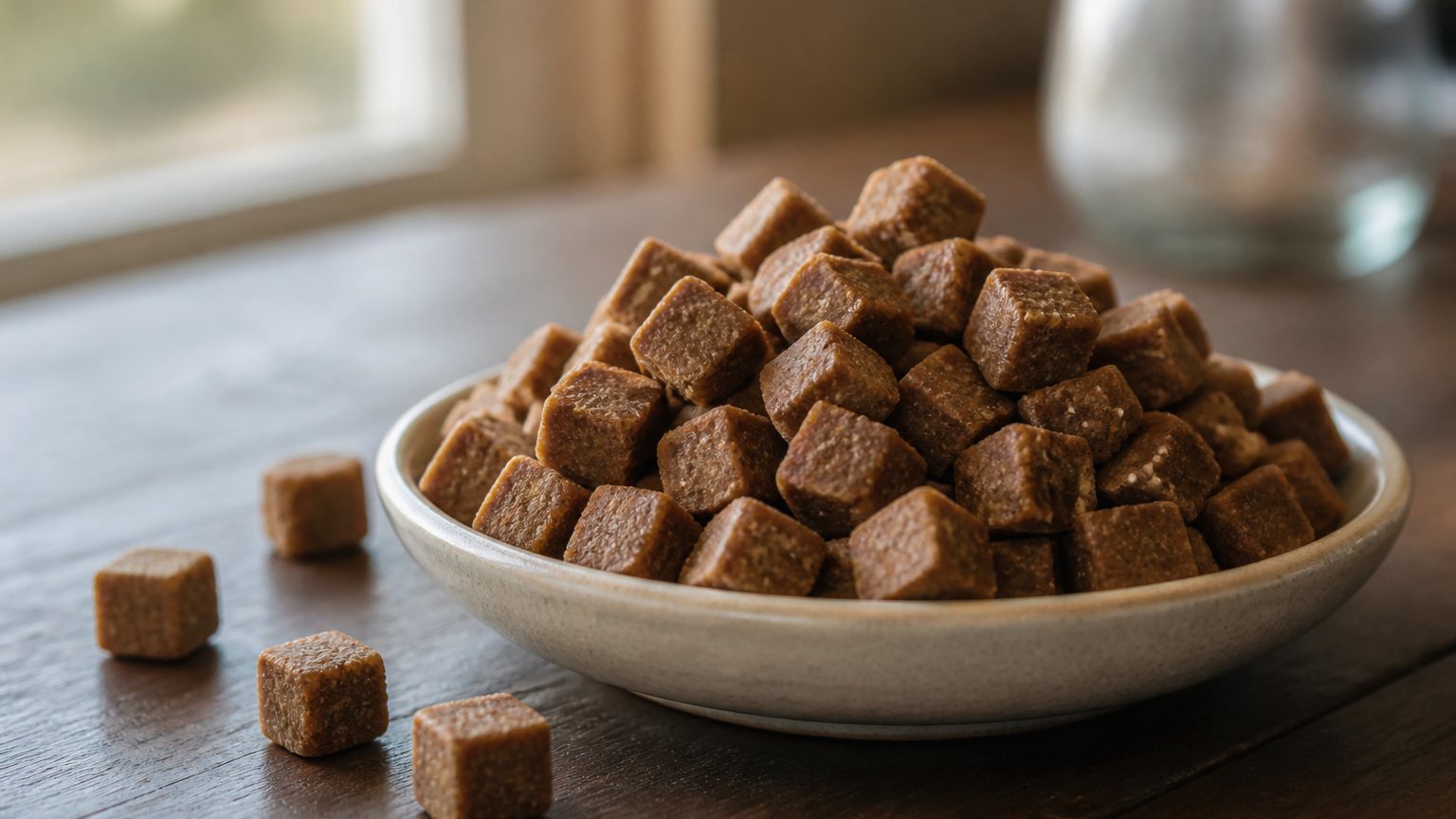
Green-lipped mussel is the premium line item. It also loses activity if you bake the piece. Our joint chew is cold-formed for that reason. The texture will never be as firm as a biscuit. If you want a rock-hard treat, you are in a different process and a different claim.
Turmeric and boswellia show up on "premium tier" briefs. Turmeric stains the matrix yellow. That stain will show through a light pouch. Boswellia is a cost and a flavour problem. Neither belongs in a first 500-unit test unless your listing already needs the story.
Hyaluronic acid and undenatured collagen (often sold as UC-II type materials) are possible. They are also easy to mislabel. If you cannot name the spec and the assay on the COA, do not put the trademark on the front panel.
A tablet is the honest format when the buyer is a vet and the dose must be exact. A chew is the honest format when the owner will not hide a pill in cheese every night. We make both. Pick one for launch. Matching chew plus tablet on day one is two SKUs, two photos, two MOQs.
Dose, bodyweight and why unit cost lies
Joint products dose by weight. A 8 kg dog and a 40 kg dog are not the same daily count. If your listing says "1 chew per 10 kg," a large breed eats two or three pieces a day. Cost per day is what the owner feels, not cost per tub.
Write the feeding table before you lock the piece weight. A 4 g chew that needs three pieces for a Labrador will lose to a 6 g chew that needs two, even if the 4 g piece looks cheaper on the quotation.
Process limits the formula
Heat, moisture and palatability cap what you can load.
Green-lipped mussel does not like a baked chew. Glucosamine at high inclusion makes the piece dusty and bitter. Fish oil in the same matrix as a joint stack is a rancidity problem; most brands keep omega in a skin-and-coat chew or an oil, not in the mobility SKU.
Ask for a sample you can leave on a shelf for a week. A piece that weeps or greases the pouch is a return, not a "premium shine."
Stock joint chews here start at 500 units. Samples for the catalogue formula typically ship in 7 to 15 days. A first branded run, artwork included, is still the 8 to 14 week path in the OEM guide. Custom actives, a new flavour, or a tablet from a chew brief is ODM.
Claims we will not write for you
We will not print "cures joint disease," "rebuilds cartilage," or "vet approved" unless you have a document that actually says that. AAFCO's public material on pet food labelling is the model many US states still point to: aafco.org. If your counsel has a cleared line, send the line. Mood-board adjectives are not a label.
Cat joint is a different brief. Cats refuse many dog textures. We have cat joint drops for that channel. Do not assume the dog chew is a cat SKU with a smaller photo.
If the stack above matches what you want to sell, put species, market and pack on the inquiry form. If you only need the ingredient logic, you already have it. The quote still needs the five facts in what to send.
Sources
Frequently asked questions
- What ingredients go in a typical private-label dog joint chew?
- Most first SKUs use glucosamine, chondroitin and MSM. Green-lipped mussel is a premium add and is heat-sensitive, so we cold-form that chew. Turmeric and boswellia are optional premium-tier extras, not a first-test default.
- Is a joint chew a treatment for arthritis?
- No. In the US, claiming to treat or prevent disease makes the product a drug under FDA CVM rules. Keep pack copy on mobility, comfort and daily joint support. Send medical wording to counsel.
- Should I launch a joint chew and a glucosamine tablet together?
- Usually no. A chew is for owners who will not hide a pill. A tablet is for clinic-style milligram dosing. They are two SKUs, two photos and two MOQs. Start with one.
- How should a dog joint chew be dosed?
- Joint products dose by bodyweight, so an 8 kg dog and a 40 kg dog are not the same daily count. If the listing says one chew per 10 kg, a large breed eats two or three pieces a day. Cost per day is what the owner feels, not cost per tub. Write the feeding table before you lock the piece weight.
- Does glucosamine need allergen wording on the pack?
- Usually yes. Our glucosamine is normally crustacean-derived, so several markets need allergen wording. If you need a non-shellfish story, say so in week one. That is a sourcing change, not a label tweak, and it has to be settled long before artwork.
- What is the MOQ and sample lead time for private-label joint chews?
- Stock joint chews here start at 500 units. Samples for the catalogue formula typically ship in 7 to 15 days. A first branded run with artwork included is still the 8 to 14 week path. Custom actives, a new flavour, or a tablet from a chew brief is ODM, not stock private label.
Stock formulas this guide maps to
These SKUs are already in production. Open a spec page or send the names in your inquiry.
 Soft chewsIn stock
Dogs · Hip & Joint
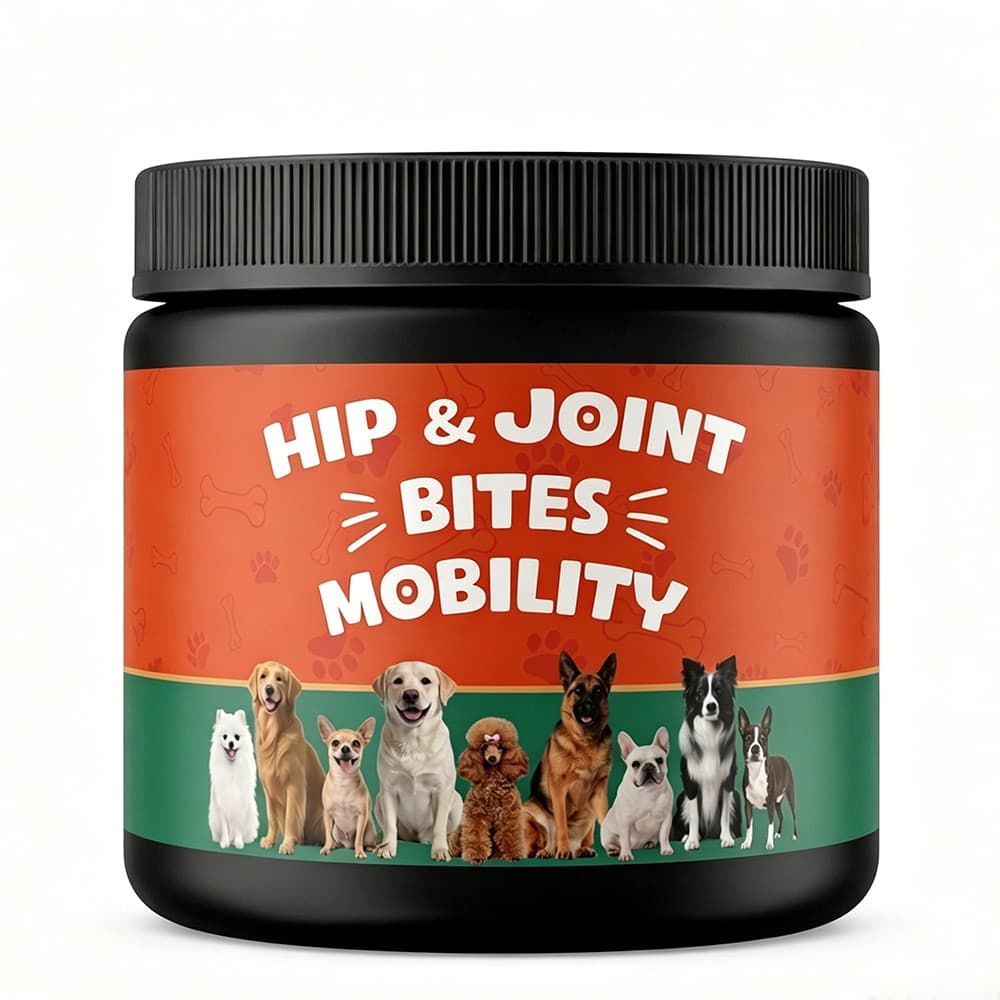
Hip & Joint Mobility Chews
Soft-chew mobility support for adult and senior dogs.
- Reference price
- US$4.09 per unit, ex-packaging
- Starting MOQ
- 500 units
 Tablets
Dogs · Hip & Joint
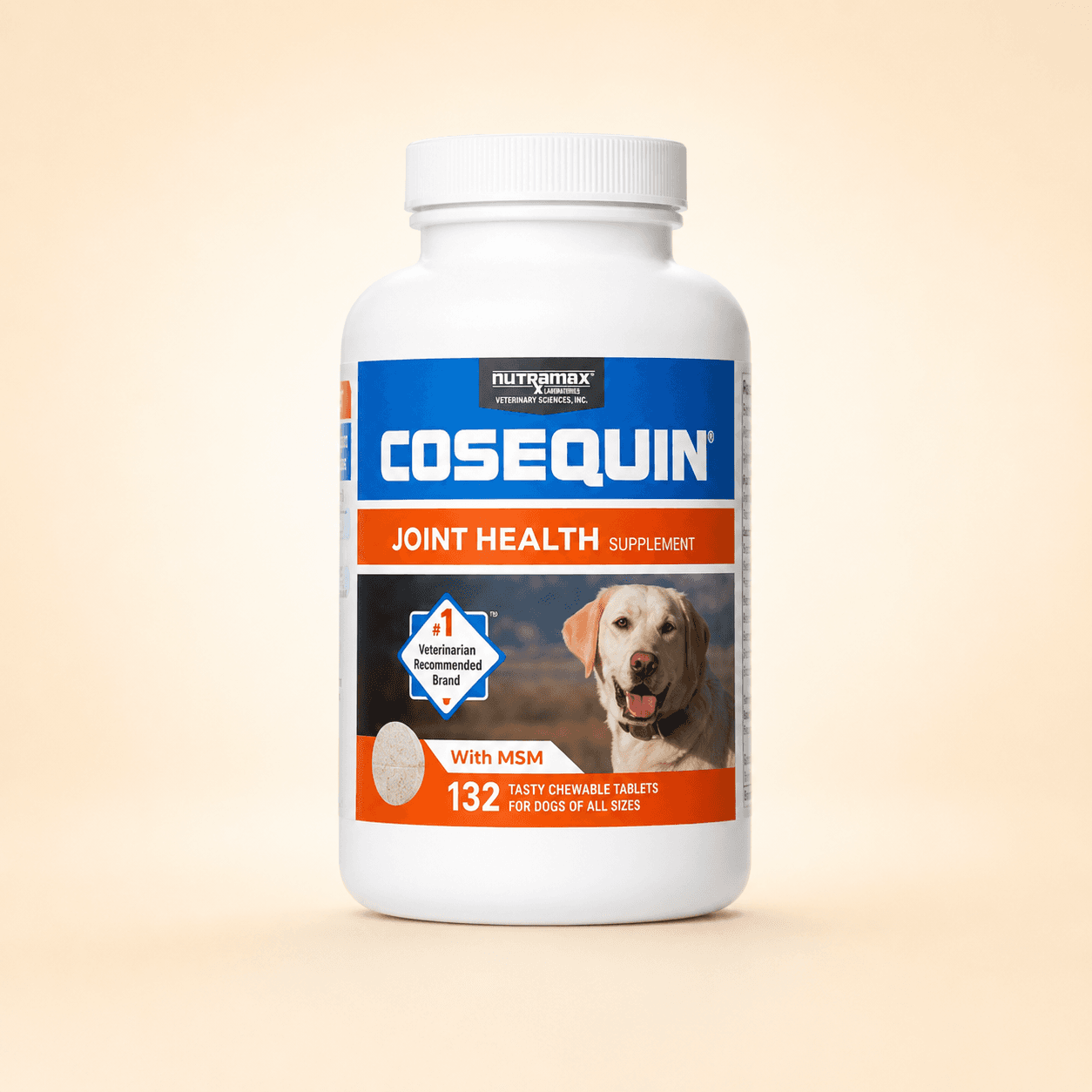
Dog Glucosamine Tablets
Tablet-format joint and mobility support for dog ranges.
- Reference price
- US$3.50 per unit, ex-packaging
- Starting MOQ
- 3,000 units
 Soft chewsIn stock
Dogs · Daily Routine
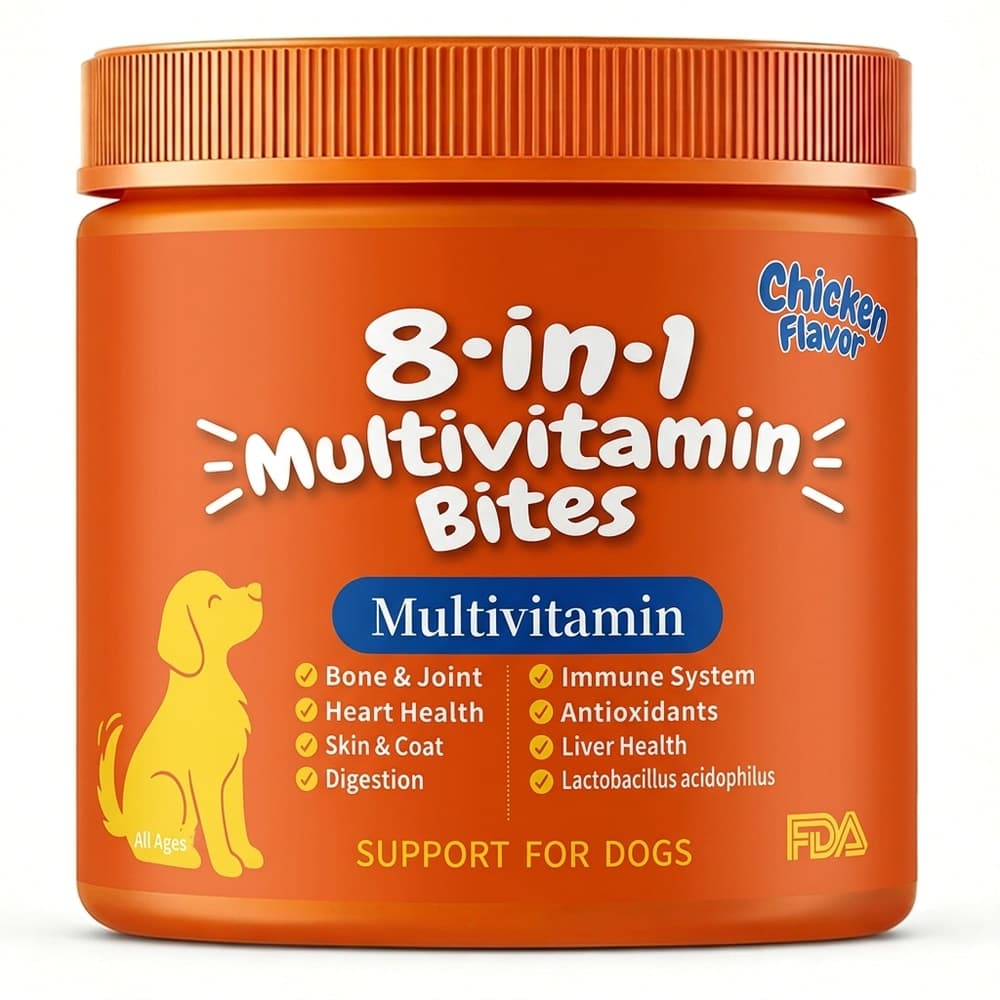
8-in-1 Multivitamin Chews
Daily vitality soft chews suitable for breed-focused programs.
- Reference price
- US$3.09 per unit, ex-packaging
- Starting MOQ
- 500 units
Turn this into a product
Send a brief and our OEM/ODM team confirms the route, MOQ and sampling path.