OEM für Heimtier-Supplements: der komplette Leitfaden von der Rezeptur bis zum Launch
Kurzantwort
Beim OEM für Heimtier-Supplements verkauft eine Marke Produkte, die ein zertifizierter Hersteller fertigt. Ein typisches Projekt dauert 8–14 Wochen: Briefing und Rezepturauswahl, Bemusterung, Verpackung und Druckdaten, GMP-Produktion mit Qualitätskontrolle und schließlich die Exportdokumentation.
Von Beno · Geprüft von Li Wang, General Manager
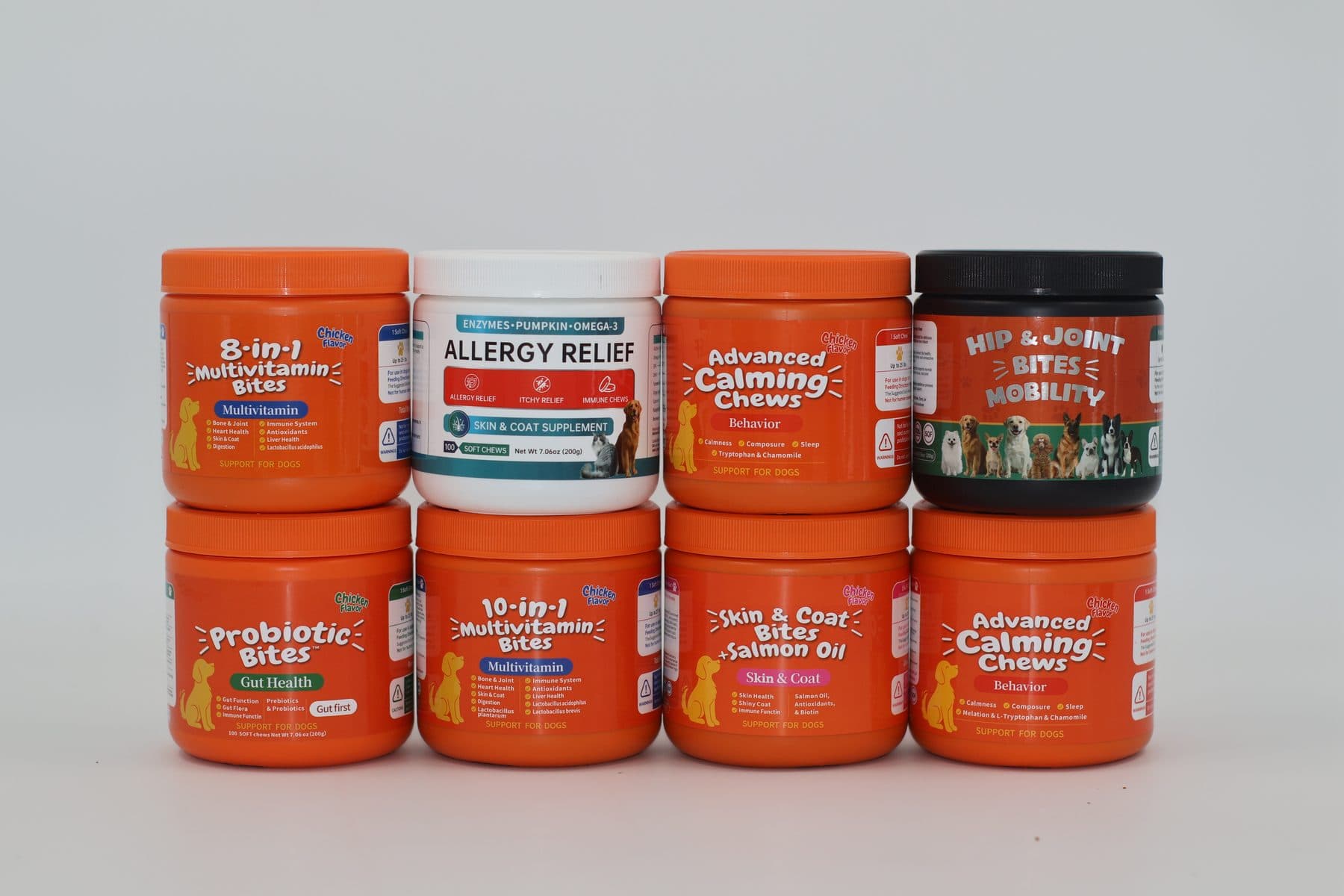
Pet supplement OEM is contract manufacturing: a factory runs your SKU to an agreed specification while you own the brand, the pack and the sales channel. You are not buying a plant. You are buying a production slot, a quality system and a document pack your importer can defend.
Most pages ranking for this query mix three commercial models into one timeline. That is why buyers get a 30-day promise and a 22-week project in the same week. This guide separates the models, then walks a first stock project the way it actually runs at Shenzhen Enbeichong in Guangdong.
If you already know you want a catalogue formula at 500 units, use what a first private-label order includes. If the format is still open, read soft chews vs powders vs drops before you brief anyone.
OEM, ODM, private label and wholesale
Search results treat these as synonyms. Factories do not.
Wholesale is buying a catalogue SKU, often in the factory's existing presentation, for redistribution. You are a buyer. You are not the brand owner of that formula's identity.
Private label is a stock formula packed in your brand. The recipe is shared. You own the finished goods you purchase and the artwork. You do not own exclusive rights to the formula unless that is a separate written deal.
OEM is manufacturing to your specification. That specification can still start from a stock base (flavour, size, pack) or from a formula you already sell. The factory runs GMP production and issues batch documents in the manufacturing legal name.
ODM adds development: a recipe written against your brief, sampling loops, and a higher commercial threshold because R&D time is not free.
A useful rule: if the factory already runs the format and the benefit on a catalogue SKU, your first launch should be private label. ODM is for when the catalogue cannot hit a claim, a flavour or a market rule you cannot drop. Mixing both in the first email is how projects stall for a month.
| Model | You bring | Factory brings | Typical first use |
|---|---|---|---|
| Wholesale | Purchase order | Finished catalogue goods | Redistribution |
| Private label | Brand and pack | Proven stock formula + GMP run | First branded SKU |
| OEM | Spec (stock or your recipe) | Production, QC, export pack | Repeatable branded manufacture |
| ODM | Brief and constraints | Formula work + sampling + production | When the catalogue cannot do it |
What ranking pages get wrong about time
Custom ODM guides on the open web often publish 14–22 weeks from concept to a scaled batch. That is a fair range if you are writing a new recipe, running palatability loops and waiting on pack tooling.
Private-label pages from other China plants often publish 30–60 days from logo to ship. That number only holds if the formula is already on the line, the pack is stock, and artwork does not bounce.
Neither number is a lie. They describe different jobs. A first project at Beno still lands in 8–14 weeks when you start from a stock formula and artwork behaves. The mixer is rarely the delay. Claims, pack type and a missing destination market are.
What a first OEM project actually contains
This is the stock-formula path. ODM inserts extra sampling weeks between brief and pack.
Weeks 1–2 — brief. Species, benefit, format, destination market, volume band, pack type. We map you to a catalogue SKU or we say it is ODM. If the market is missing, we cannot flag labelling. The five-line version of this brief is in what to send for an OEM quote.
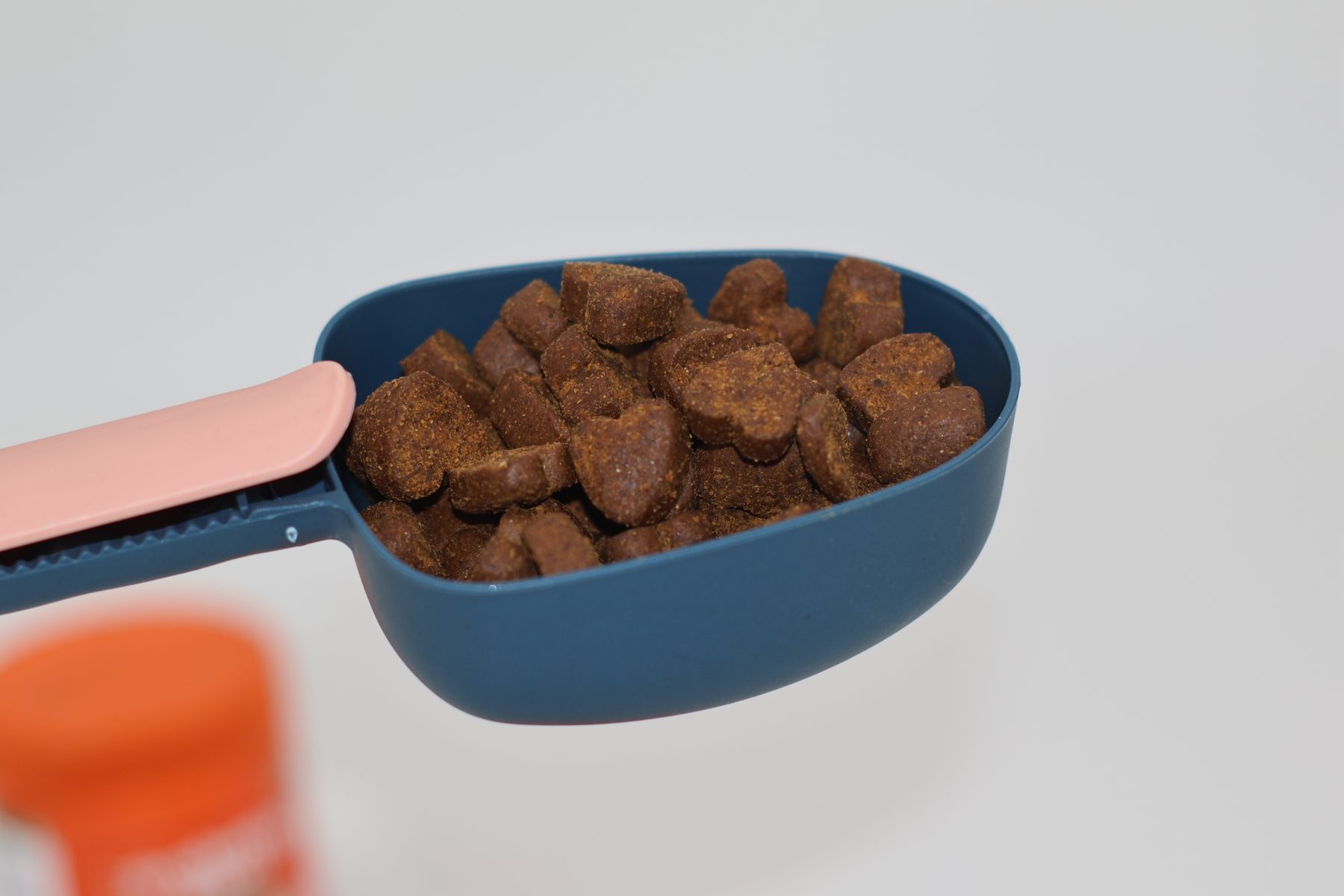
Weeks 3–6 — samples. Stock formulas typically ship in 7–15 days. You check palatability, colour, size and how the piece looks in pack. One revision is normal. Three flavour changes before you have a market is how you burn a month.
Weeks 5–8 — pack and artwork. Pouch, bottle or jar changes the quote. So does a language set. Destination-market rules sit here, not at the dock. If legal has not cleared the claim, stop the artwork.
Weeks 8–12 — GMP batch. After sample approval, a production run is typically 25–35 days. In-process checks and finished-product testing are part of the slot, not an optional extra.
Weeks 12–14 — documents and freight. Batch COA, packing list, commercial invoice in the manufacturing name, and the rest of the export pack. Incoterm has to be on the quote or someone will invent one in WhatsApp.
Repeat orders skip most of the front. They come down to the production window plus freight.
How a buyer should pick the plant
Feelshine-style "how to choose a manufacturer" pages list capability, R&D, QC, certificates, communication and supply chain. That list is fine. Here is how it looks when you are actually buying a chew.
Can they run the format. If you need a soft chew, ask whether the line in the video is the line on the certificate address. A paste filling room does not prove a chew.
Can they change a formula. Stock private label is fast. Custom is slower. If they say both in one sentence with one timeline, they are mixing jobs. We split them in writing.
What you get as PDFs the same day. GMP identifier, SQF pet-food scope, a sample COA. How to read the plant papers is the GMP article. How to read a batch COA is this guide.
Whether they answer the brief you sent. Fast WhatsApp on a vague "best price" is not the same as a quote against species, format, market and pack.
Whether they will still have actives in twelve weeks. A pretty tour does not restock glucosamine. Ask lead time on the named active if it is single-source.
An on-site or video audit checklist is how to audit a pet supplement factory. Factory versus trader is the China OEM article.
MOQ and price, without a fake firm number
Chinese industry talk still quotes about 3,000 bottles as a soft-chew floor at many plants. Some China listings say 500 bottles and mean a bottle of 60 chews. US contract manufacturers often start nearer 2,500 units. Those are different units. Ask which one is on the quote.
Our extrusion line runs at five tonnes per hour, which is why a 500-unit stock chew SKU is a commercial run, not a favour. Other formats also start at 500 units; the number that matters is the one printed on your quotation. Why 500 is viable, and what that order does not include, is the 500-unit private label article.
Catalogue reference prices start around US$1.62 per unit and exclude packaging. Pack, tests, volume and Incoterm move the invoice. Anyone who sends a firm unit price after "joint chew, private label" is guessing.
Documents you should expect without chasing
If the factory cannot show these as PDFs, you are not in a manufacturing conversation yet.
- GMP evidence with identifier and dates. Ours is Eurofins GMP audit recognition ACCB8AAA422_1, through 14 June 2027 (audit score 86%).
- SQF pet-food manufacturing certificate. Ours: SIN 105690, SQF Food Safety Code: Pet Food Manufacturing, Edition 9 (audit score 88), issued 20 July 2026, valid through 28 August 2027, plus the SQF Quality Code.
- Manufacturing legal name on the invoice: Shenzhen Enbeichong Co., Ltd.
- Unified Social Credit Code 91321283MA1MR5HB8P and D-U-N-S 404129816.
- FDA Food Facility Registration 10222600768 if the US is in scope (renewed biennially; currently through 31 December 2026).
- A sample COA from a similar format.
How to read those files is the GMP and SQF article. How to ask for them before you fly is the China OEM vetting checklist. PDFs sit on the quality page.
Destination market is a manufacturing input
US, EU, UK, Japan and China do not share a label. Competitors' OEM guides list AAFCO, EU novel food and Halal as if every factory runs all of them on every SKU. That is a sales slide.
What we need in week one is the country list and the channel (Amazon, specialty retail, clinic, distributor). That decides language, warning statements, and which documents travel with the goods. We will not invent a registration pathway you did not name. If your counsel has a claim that must print, send the claim, not a mood board.
Incoterm is the other quiet input. FOB Shanghai, CIF destination port and DDP are different invoices. If the quote is silent, the WhatsApp "factory price" is not a price.
What to do with the sample
A stock sample is not a souvenir. Check:
- Does the animal take it twice, not once.
- Colour and size against the listing photo you plan to shoot.
- Bag or bottle after a week on a shelf, not only on the day it arrives.
- Whether the piece matches the format you will actually sell. A chew sample does not prove an oil.
One revision is in the plan. A third flavour before you have a market is not R&D. It is indecision billed as sampling.
Repeat orders
Second and third runs skip formula selection and most sampling. They still need artwork if you change pack, and they still need a production slot. Lead time collapses toward 25–35 days plus freight, not toward zero. If you expect a seasonal spike, say so when you brief the first run so scheduling is not a surprise.
Where first projects actually fail
They fail on claims that counsel has not cleared. They fail on pack type decided after the quote. They fail on "exclusive formula" promised in a chat that never becomes a contract. They fail when five people brief five factories with five different volumes.
They also fail when the buyer treats a trader's meeting room as a factory. Legal name on the WeChat card and legal name on the invoice have to match. If they do not, stop.
Send one brief. Put the five facts in it. Use the quotation form so production sees the same fields every time.
A factory that already runs your format will not invent a new plant for your SKU. It will tell you yes, no, or ODM. That answer, in writing, is the start of the project.
Quellen
Häufige Fragen
- What is the difference between OEM and ODM for pet supplements?
- OEM produces a product to your specification, often from a stock formula under a private label. ODM adds custom formula development. Many brands start with OEM stock formulas to launch quickly, then move to ODM as volume grows.
- How long does a pet supplement OEM project take?
- A typical first project runs 8–14 weeks across brief, sampling, packaging, GMP production and export documentation. Custom formulas and specialty formats sit at the longer end.
- What documentation should a brand expect from an OEM manufacturer?
- Expect a certificate of analysis per batch, stability data supporting the shelf life, and regulatory dossiers matched to the destination market and product claims.
- What is the MOQ for a first pet supplement OEM order?
- Stock soft chews start at 500 units per SKU, and other formats also start at 500, but the number that matters is the one printed on your quotation. Ask whether the floor is quoted in units or in bottles, because those are different numbers. Catalogue reference prices start around US$1.62 per unit and exclude packaging.
- Why does the destination market matter before manufacturing starts?
- The US, EU, UK, Japan and China do not share a label. We need the country list and the channel in week one, because that decides language, warning statements and which documents travel with the goods. Incoterm is the other quiet input: FOB Shanghai, CIF destination port and DDP are different invoices.
Stock formulas this guide maps to
These SKUs are already in production. Open a spec page or send the names in your inquiry.
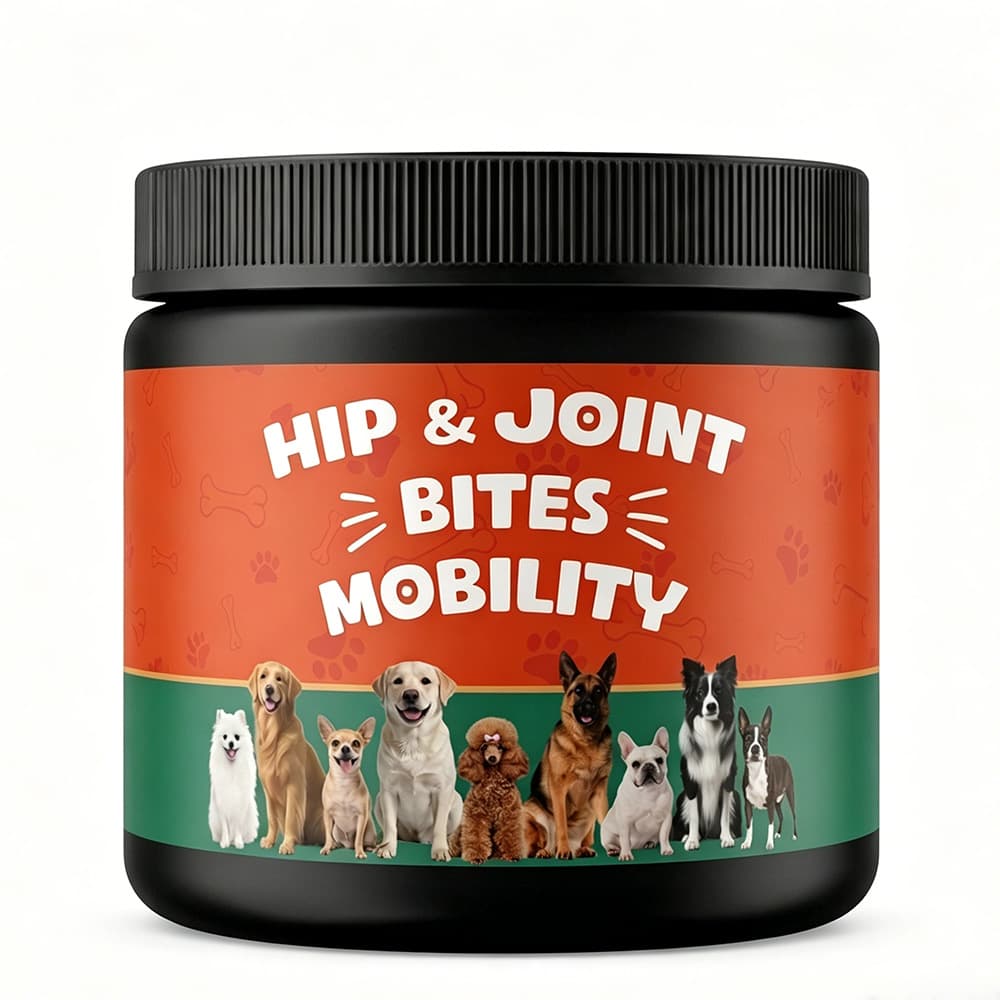 SoftkausnacksSofort lieferbar
Hunde · Hüfte & Gelenke
Softkausnacks für Hüfte & Gelenke
Gelenkunterstützung als Softkausnack für ausgewachsene und ältere Hunde.
- Referenzpreis
- US$7.16 je Einheit, ohne Verpackung
- Mindestmenge ab
- 500 Einheiten
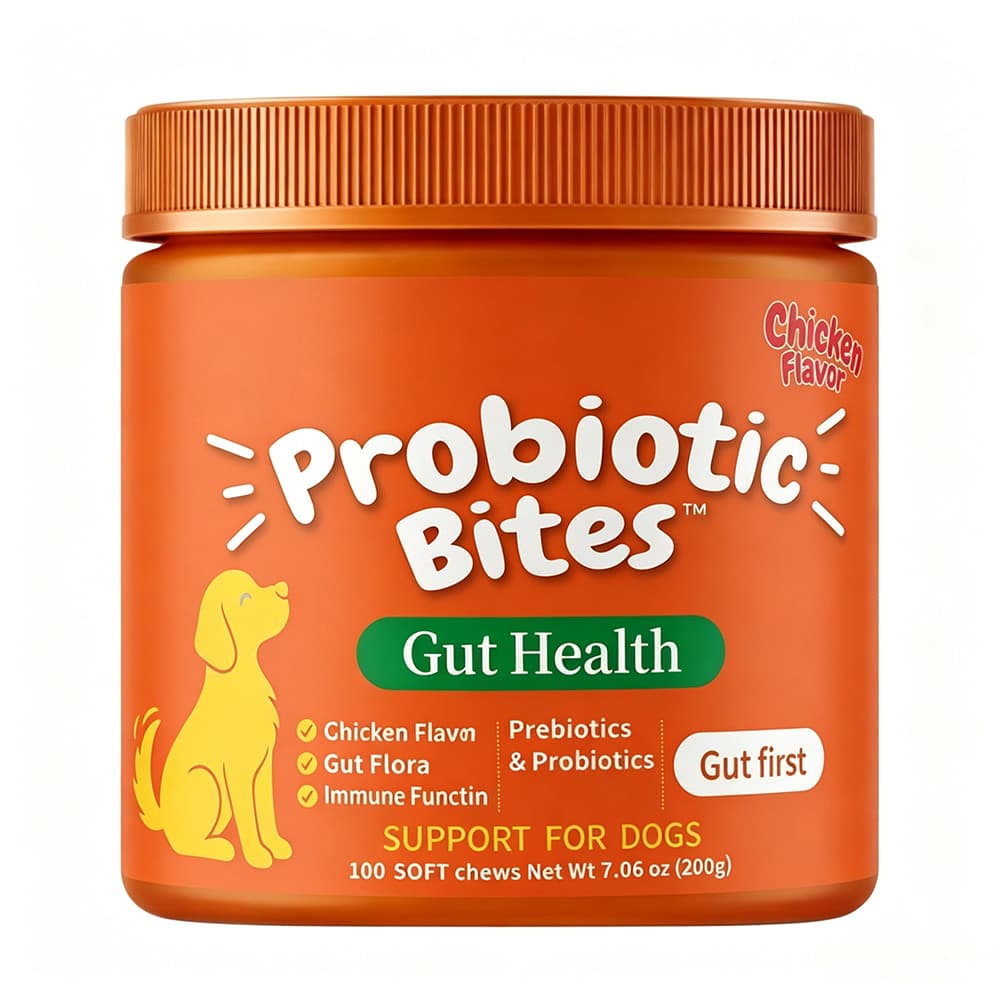 SoftkausnacksSofort lieferbar
Hunde und Katzen · Darmgesundheit
Probiotische Softkausnacks für die Darmgesundheit
Tägliche Verdauungsunterstützung in einem leicht positionierbaren Format.
- Referenzpreis
- US$3.60 je Einheit, ohne Verpackung
- Mindestmenge ab
- 3,000 Einheiten
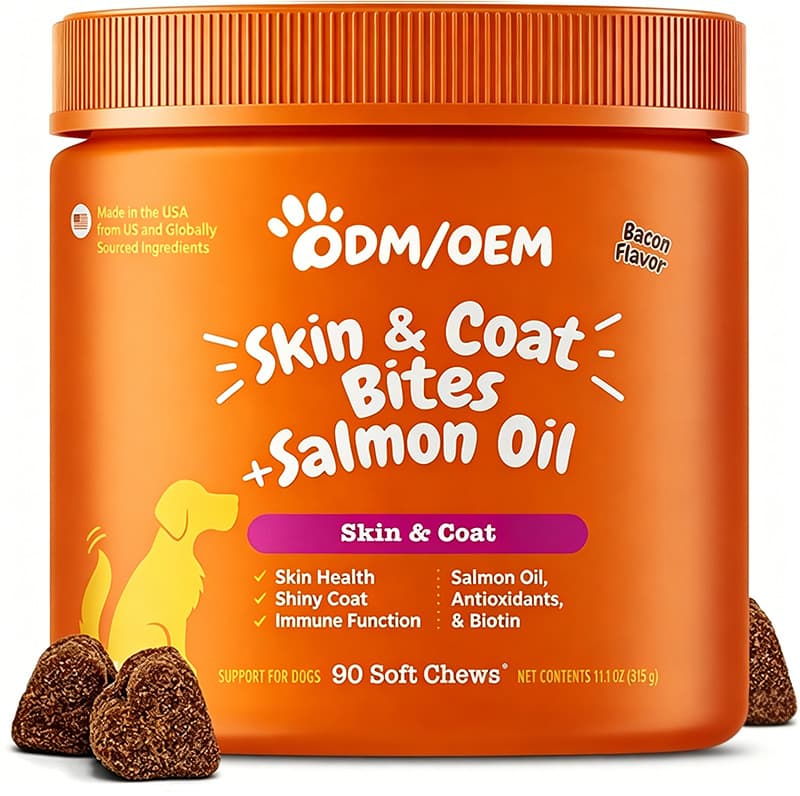 SoftkausnacksSofort lieferbar
Hunde und Katzen · Haut und Fell
Softkausnacks für Haut & Fell mit Lachsöl
Fellpflege-Softkausnack für Beauty- und Wellness-Sortimente.
- Referenzpreis
- US$5.06 je Einheit, ohne Verpackung
- Mindestmenge ab
- 500 Einheiten
Machen Sie ein Produkt daraus
Senden Sie uns ein Briefing – unser OEM/ODM-Team bestätigt Weg, MOQ und Musterprozess.